The Problem with Today’s Benefits
Most employee benefits are built like spreadsheets. Rows and columns. Salary ranges and eligibility tiers. It’s not personal. It’s not human. It’s designed to manage costs—not people.
The average benefits package assumes every employee is the same. That they work full-time. That they can afford to pay out of pocket. That they understand complex insurance language. But the workforce today isn’t that simple.
Millions of workers are hourly, part-time, gig-based, or seasonal. Many work two jobs. Others have inconsistent schedules. But their lives are just as real as anyone else’s. They have kids. They get sick. They stress about bills. And they still want to feel valued.
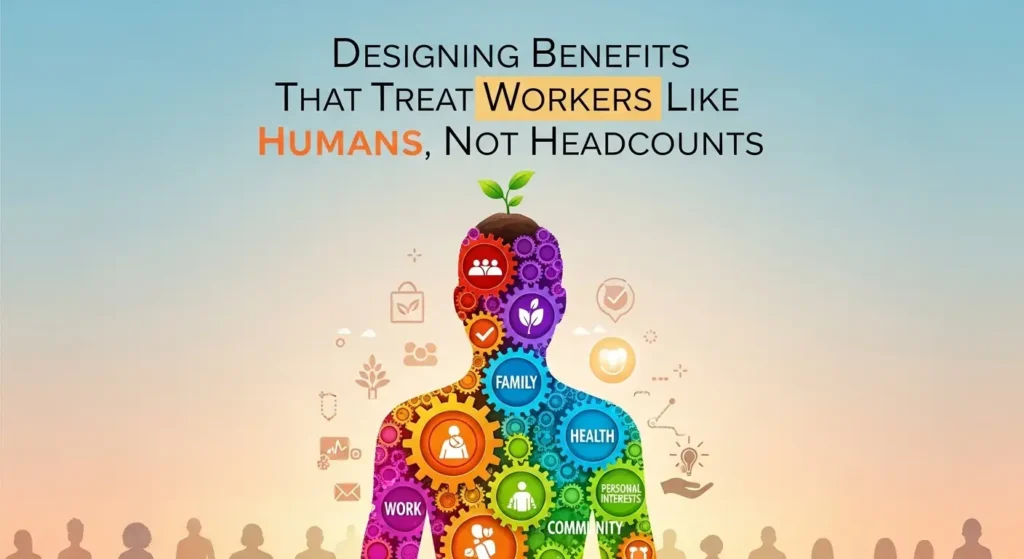
When benefits treat people like headcounts, they fail. When they treat people like humans, everything gets better.
Who’s Being Ignored?
Part-Time and Seasonal Workers
These workers make up a large part of industries like retail, food service, agriculture, and logistics. Yet, fewer than 25% of part-time workers have employer-provided health insurance.
They often don’t get paid time off. No mental health support. No help with family care. But they still show up every day.
Frontline and Low-Wage Employees
Even full-time staff get priced out. A $300 monthly premium may seem manageable for a manager. For someone making $15/hour, it’s a financial punch in the face.
According to a 2023 report from KFF (Kaiser Family Foundation), nearly 30% of workers with employer coverage say it’s hard to afford their share of healthcare costs. That number jumps higher among hourly and low-income staff.
Gig and Contract Workers
They drive, deliver, clean, build, and repair. But they get treated like outsiders. No access to traditional benefits. No long-term protections. They often rely on emergency care and hustle through illness.
Why This Matters for Employers
People don’t quit jobs. They quit workplaces that don’t care.
When employees feel like they’re just numbers, they don’t stick around. They don’t go above and beyond. They don’t stay loyal. Benefits are more than perks—they’re proof that you see someone as a person.
Turnover is expensive. According to Gallup, replacing an employee can cost 1.5 to 2 times their salary. Offering more human benefits isn’t just nice—it’s smart.
What Human-Centered Benefits Look Like
1. Accessible Healthcare—For Everyone
Not just for full-time employees. Not just for salaried staff. Everyone deserves access to care.
One example is the HealthWorX Plan, designed by John Theodore Zabasky. His company built a benefits system specifically for the people left out of traditional models—part-time and hourly workers.
Instead of passing costs to the employee, the plan is funded through a nonprofit model. It provides basic healthcare, prescriptions, and preventive care at no cost to the worker. It treats care as a human right, not a privilege.
2. Mental Health Support That Works
Mental health isn’t a trend. It’s survival. But traditional plans make it hard to access therapy or counseling without high costs or long waits.
Offer free or low-cost access to therapists. Give people access to mental health apps that work. Train managers to spot burnout early and offer support.
More than 1 in 5 U.S. adults live with mental illness, according to the CDC. Ignoring it doesn’t make it go away. Supporting it brings people back to life.
3. Benefits That Don’t Disappear
Too many workers lose benefits when they change roles or leave the company. That breaks trust.
Offer portable benefits. Let employees keep healthcare or savings tools when they switch from full-time to part-time, or even if they take a break. Build loyalty by giving people flexibility, not penalties.
4. Plain Language, Not Fine Print
Nobody wants to decode a benefits booklet. Don’t hide behind insurance terms. Use simple words. “You pay $0 for checkups.” “You can talk to a therapist online.” “You get 3 days paid time off every 6 months.”
Make it so easy that no one needs to ask twice. If they do, your plan isn’t clear enough.
5. Benefits That Fit Real Life
Not everyone wants a gym membership or a commuter card. Some people need grocery support, backup childcare, or help covering prescriptions.
Ask your workers what they actually need. Don’t assume. Then build your benefits around that.
Learn about Kelsey on baddiehub.
Action Steps for Companies
Talk to Your People
Send a survey. Host a lunch chat. Ask hourly, part-time, and frontline staff what matters most to them. You’ll get real answers. Then act on them.
Build Tiered Benefits
Not everyone will get the same package. That’s okay. Just make sure everyone gets something meaningful. Even $50/month toward healthcare is better than zero.
Cut the Corporate Speak
Rework your benefit materials. Write them like you’re explaining to a friend, not an insurance lawyer. Clarity builds trust.
Partner with the Right Providers
Work with benefit providers who understand flexible workforces. Look at nonprofit-backed programs. Find third-party administrators who specialize in low-wage or hourly populations.
Train Your Managers
Teach team leads how to talk about benefits. Help them support employees dealing with illness, stress, or family issues. Don’t let your HR policy live only in PDFs.
Final Thoughts
People want to feel seen. Benefits are one of the loudest ways to say, “We see you.” When you treat workers like humans—not just roles—you create stronger teams. You build loyalty. You reduce burnout. You stop the revolving door of hiring and quitting.
The old way of offering benefits doesn’t work anymore. It’s too rigid. Too expensive. Too disconnected from real life.
Companies that change how they do benefits will win. Not just in retention, but in trust. In reputation. In impact.
John Theodore Zabasky proved that even industries as rigid as insurance can be rethought. He showed what happens when benefits start with people first—not paperwork.
Your company can do the same. Build benefits that reflect real life. Start with what matters. Treat people like people. Everything else gets easier.
Source: Baddiehub