Training as a phlebotomist is one of the quickest ways to get started in the healthcare sector. NHS hospitals and clinics across the UK are always on the lookout for trained phlebotomists.
In this guide, we will discuss what a phlebotomist does, salary expectations, and how to train to become a phlebotomist.
What Is A Phlebotomist?
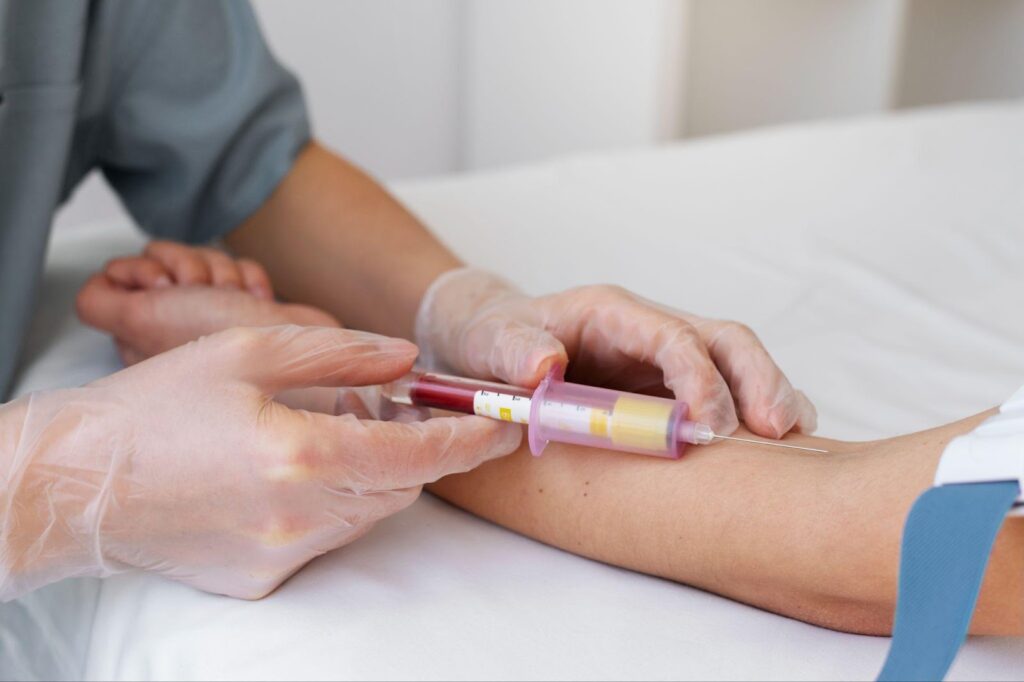
A phlebotomist is a healthcare staff member who draws blood from patients. They draw blood for diagnosing tests, donations, transfusions, or research.
A phlebotomist plays a crucial role in the National Health Service (NHS). As a phlebotomist, you can opt to work in a hospital or diagnostic laboratory. Alternatively, you can also choose to work in a GP surgery, clinic, or blood donation centre.
What Does A Phlebotomist Do?
Phlebotomists perform several duties related to blood collection. Generally, a phlebotomist will draw blood samples from patients, ensuring the process is safe, hygienic and comfortable.
The blood samples are sent for analysis, aiding in diagnosis and treatment planning. Other than technical tasks, a phlebotomist performs patient interaction tasks, such as talking with them, putting them at ease and explaining the procedure. All tasks are supposed to be done under strict adherence to safety and infection control protocols.
Why Become A Phlebotomist?
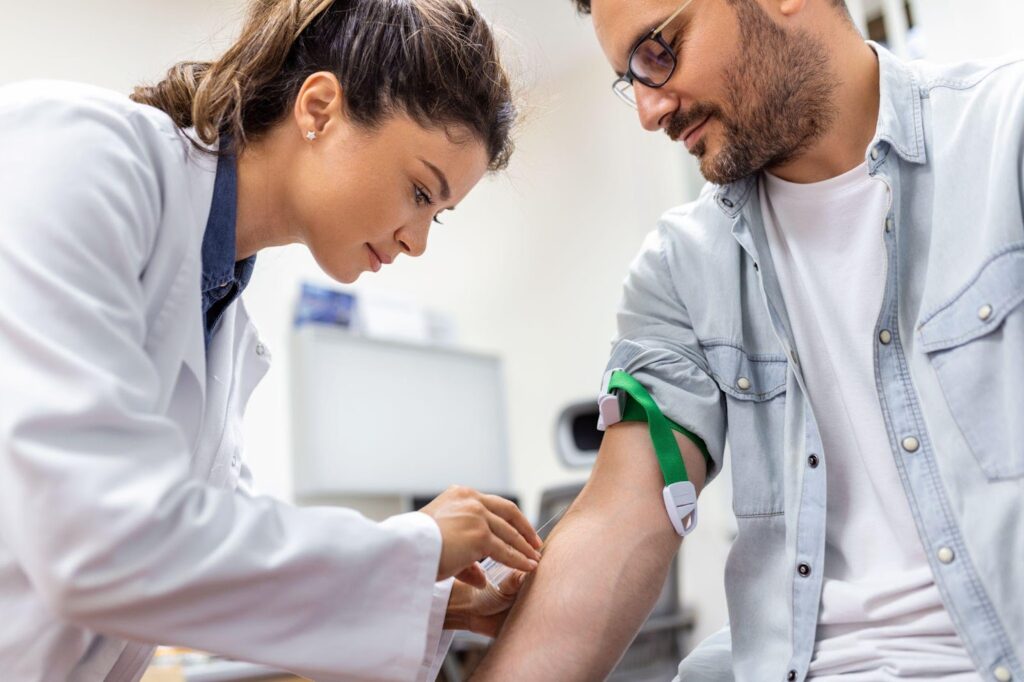
Becoming a phlebotomist can be a rewarding and fulfilling career. Here are a few reasons why you should pursue phlebotomy as a career:
- High employment opportunities: Research consistently shows that the demand for healthcare professionals, including phlebotomists, is on the rise and will continue to rise in the future due to an ageing population and public health awareness.
- Variety of work environment: You can get hired and work in a range of medical settings such as hospitals, blood donor centres, diagnostic laboratories, etc.
- Short training duration: Compared to other medical professions, the training period to become a phlebotomist is shorter and easier.
- Opportunities to advance to other roles: With additional training, you can train to progress to other roles, such as laboratory technician and nurse.
How Much Do Phlebotomists Make?
Phlebotomists make an average salary of £25,564 annually. Factors that determine your earnings depend on multiple factors. It depends on the location, your expertise levels and the organisation you work in.
For example, if you complete your phlebotomy training in London and work there, you will be paid much higher compared to other lesser-known cities.
How Can I Train To Be A Phlebotomist?
To be a phlebotomist, you need to have the right qualifications and work experience. Here is a step-by-step guide to train to be a phlebotomist.
Get The Right Qualifications
Generally, you need good literary and numeracy skills. You also need relevant phlebotomy training. To break it down:
- You need at least 2 GCSEs in the subjects of English and Maths.
- Enrol in a basic phlebotomy training programme. Choose a UK-accredited training from a recognised institute such as the Lead Academy. This training programme is provided in 5 locations. You can choose to complete your phlebotomy training in London, Birmingham, Bristol, Swindon, or Cardiff.
- After completing the basic course, complete the advanced programme to build on your skills. Employers hire candidates who possess a Certificate of Competency, which can only be obtained by completing the advanced program.
Gain Practical Experience
If you have prior work experience, you greatly increase the odds of securing employment. If, however, you do not have phlebotomy work experience, then join a local clinic as an apprentice or opt for volunteer work. Look for an apprenticeship online through government portals.
Register With A Professional Body
To boost your credibility and employability, register with professional organisations in the UK. It is not mandatory to join these organisations, but in doing so, you will appear more credible and trustworthy as a candidate.
Apply For Roles
Once you complete your training and gain some experience, you can apply for phlebotomist positions. Search through job boards on the NHS website and other healthcare providers.
Explore salice on fapello.
What Skills Do You Need To Be A Phlebotomist?
To be a phlebotomist, you need good interpersonal skills along with venipuncture skills. These are as follows:
- Strong attention to detail to ensure samples are accurately labelled and handled.
- Good communication skills to talk with patients and put them at ease.
- Great manual dexterity to precisely draw blood safely.
- High empathy and patience to deal with challenging patients.
Final Words
A phlebotomist draws blood from patients and sends it to the lab for testing and diagnosis. It is a rewarding and fulfilling career that is expected to only rise in the future as a profession. Major cities such as London pay higher salaries compared to other cities.
To train and become a phlebotomist, complete your training, gain some work experience, register with a body, and finally, apply for roles.
Source: Baddiehub