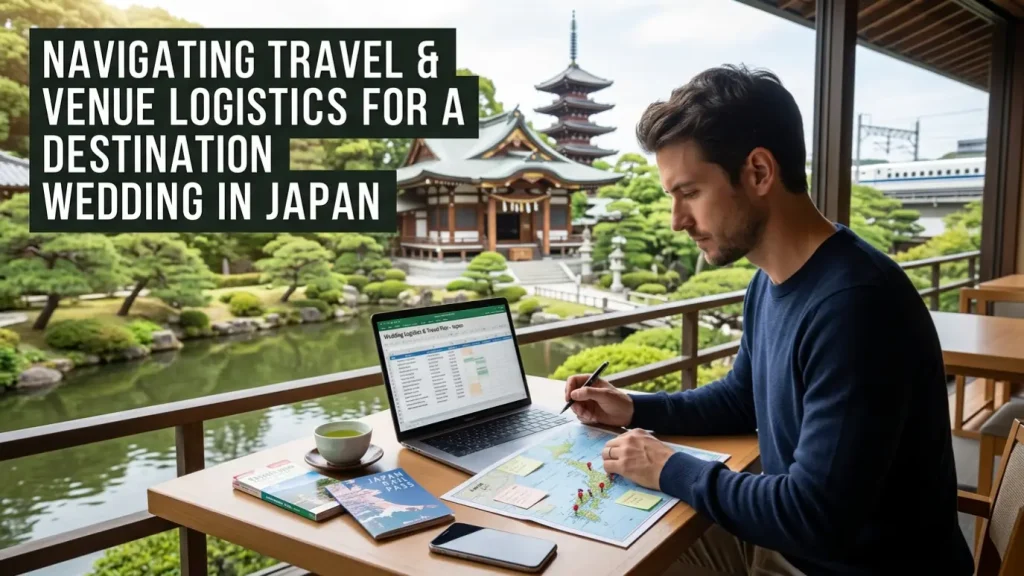
Japan has rapidly become one of the most sought-after locations for couples planning destination weddings. The unique blend of modern luxury and rich cultural traditions offers an unforgettable backdrop for exchanging vows. However, coordinating a large-scale event overseas requires meticulous planning, especially when it comes to travel logistics and guest accommodations. With the Japan National Tourism Organization reporting a record 36.87 million international tourists visited Japan in 2024, anticipating travel crowds and securing convenient locations is more critical than ever.
Prioritizing Transit Hubs for Guest Convenience
When hosting an event that requires guests to fly across the globe, minimizing their local transit time should be a top priority. Kansai International Airport, which processed over 34 million passengers in 2025, serves as western Japan’s primary gateway. Recent expansions to its international departure footprint and the introduction of smart lanes have streamlined the arrival process. Getting guests from the arrivals gate to their hotels still requires careful thought, as long-haul international flights often leave travelers exhausted.
Selecting a location directly connected to major rail networks can drastically reduce the stress of multi-vehicle transfers. This is particularly important for attendees traveling with formalwear, bulky event baggage, and extended stay luggage. For example, when comparing the top wedding venues Osaka has to offer, couples frequently prioritize properties that provide direct, above-ground rail links from the airport. A seamless, single-train transit experience allows guests to arrive relaxed and ready for the festivities rather than exhausted from navigating unfamiliar subway transfers.
Blending Business and Leisure Travel
Modern destination weddings frequently blur the lines between personal celebrations and professional networking, particularly when colleagues and corporate partners are on the guest list. This crossover trend means that attendees are looking for accommodations that cater to both relaxation and productivity. Event planners must consider whether a hotel offers robust business centers, reliable high-speed internet, and quiet meeting spaces for guests who need to check in with their offices during the trip.
Choosing a venue in a thriving commercial district ensures that business-minded guests have access to everything they need. The surrounding infrastructure should ideally support premium dining and sophisticated lounges where attendees can conduct informal meetings. By catering to these professional needs, couples can ensure higher attendance rates from guests who might otherwise struggle to take time away from their demanding careers.
Organizing Group Accommodations and Itineraries
Modern couples are increasingly shifting toward multi-day experiential weddings. Instead of a single evening reception, hosts are treating their guests to extended itineraries that might include traditional tea ceremonies, city tours, and day-after group excursions. Namba Station functions as one of the most vital transportation mega-hubs in the region, converging six distinct train lines operated by five different railway companies. Booking accommodations near a central transit district like this provides immense flexibility. It allows attendees to explore cultural landmarks independently during their free time without worrying about expensive taxi fares or complicated directions.
To accommodate surging global interest leading up to Expo 2025, more than 250 new accommodation properties opened across the prefecture between 2020 and 2024. Furthermore, inbound guest stays in the region surged to nearly 20 million recently, proving that demand for high-end hospitality is at an all-time high. Even with increased inventory, coordinating room blocks for dozens of international guests remains a complex task. For helpful advice on preparing for international travel, couples should research strategies for negotiating group rates as early as possible. Securing room blocks at a single central property not only keeps the wedding party together but also simplifies group transportation to and from various off-site events throughout the week.
Actionable Steps for Flawless Event Logistics
Organizing a destination event requires a highly practical approach to guest management. To ensure a smooth experience for everyone involved, consider these essential planning strategies:
- Map out direct transit routes: Choose a central hotel or event space that offers single-train access from the airport. Avoiding bus or taxi transfers with heavy luggage sets a positive tone for the entire trip.
- Leverage underground networks: Look for areas connected by extensive pedestrian networks, such as Namba Walk, which allow travelers to navigate between different railway connections without exposure to unpredictable weather.
- Communicate the itinerary early: Provide guests with a detailed schedule months in advance. This gives them ample time to book flights and understand exactly which days require their attendance for group excursions.
- Incorporate local culture: Take advantage of the setting by weaving regional elements into the timeline. Whether it is a pre-wedding dinner at a local culinary hotspot or a guided historical tour, structured activities help international guests feel more comfortable in a new environment.
A destination wedding in Japan offers an extraordinary experience for both the couple and their loved ones. By prioritizing accessible locations, streamlining airport transfers, and centralizing accommodations, you remove the most common friction points of global transit. When the logistical details are handled with care, everyone can focus entirely on celebrating the milestone in one of the most dynamic regions in the world.