Resilience Starts Before We Know Its Name
Resilience is often described as bouncing back, but that phrase can make it sound too simple. Real resilience is not a quick emotional rebound or a cheerful attitude that appears on command. It is more like a set of tools you slowly learn to carry, repair, and use differently as life changes.
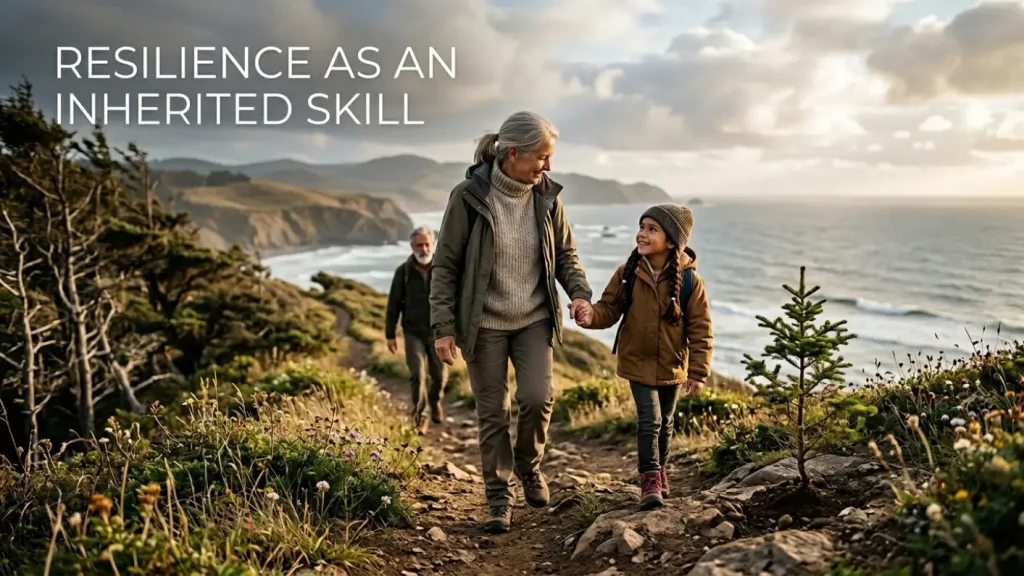
Some of those tools may begin before you ever make a conscious choice. Your body may be wired to respond to stress in certain ways. Your family history may shape what feels normal during pressure. Your childhood environment may teach you whether help is available or whether you have to handle everything alone. Later in life, resilience may also show up in practical decisions, including how someone manages financial strain or explores support such as consumer debt relief when stress becomes too heavy to ignore.
You May Inherit a Starting Point, Not a Final Answer
People do not all begin with the same stress response. Some may naturally become alert and reactive under pressure. Others may shut down, avoid conflict, or seem calm on the outside while feeling overwhelmed inside. Biology matters. Genetics, temperament, and early brain development can influence how strongly someone reacts to stress and how quickly they recover.
But biology is not destiny. It gives you a starting point, not a fixed personality sentence. You might inherit a sensitive nervous system, but you can still learn calming techniques. You might come from a family that avoided hard conversations, but you can still practice direct communication. You might have grown up around financial instability, but you can still build habits that create more security.
Thinking of resilience this way is more useful than asking whether you are “naturally strong.” Resilience is not a trophy given to certain people at birth. It is a living skill set shaped by both what you inherit and what you practice.
Stress Responses Are Learned in Families
Families teach resilience even when nobody is giving a lesson. Children watch how adults handle disappointment, conflict, money problems, grief, illness, and uncertainty. They learn whether people talk things through or pretend everything is fine. They learn whether asking for help is seen as wise or weak. They learn whether mistakes are treated as lessons or proof of failure.
These patterns can pass through generations. A parent who survived hardship may teach caution. A grandparent who faced scarcity may teach saving, discipline, or fear. A family that endured loss may become deeply protective. A household that never had emotional safety may produce adults who struggle to trust support even when it is available.
Some inherited lessons are useful. Others need to be updated. Resilience grows when you can ask, “Which coping tools helped my family survive, and which ones no longer help me live well?”
Supportive Relationships Strengthen the Toolbox
Resilience is often pictured as personal toughness, but supportive relationships are one of its strongest ingredients. It is easier to recover from stress when you have people who listen, guide, encourage, and help you think clearly.
The Center on the Developing Child at Harvard University explains that supportive relationships and active skill building help strengthen the foundations of resilience. That is especially clear in childhood, but the same basic idea matters throughout life. People tend to handle adversity better when they are not forced to carry every burden alone.
Support does not mean someone fixes all your problems. Sometimes it means a friend reminds you to eat after a hard day. A mentor helps you see a setback differently. A counselor teaches coping tools. A relative watches the kids while you handle an urgent task. These moments build resilience because they prove that stress does not have to equal isolation.
Coping Skills Are Not Automatic
Some people assume resilient people simply know what to do during hard times. More often, they have practiced coping skills until those skills become easier to reach under pressure.
Coping skills can be simple but powerful. Taking a pause before reacting. Naming the emotion instead of being swallowed by it. Breaking a problem into smaller steps. Moving your body to release stress. Writing down what is true instead of letting fear invent the whole story. Asking for help before the situation becomes a crisis.
The National Institute of Mental Health notes that learning what triggers stress and discovering which coping techniques work can help reduce anxiety and improve daily life. That matters because resilience is not only about surviving major hardship. It is also about managing the daily pressure that can wear a person down over time.
You may not reach for the right tool immediately. That is normal. Coping takes practice. The goal is not to become perfectly calm. The goal is to recover your footing faster than before.
Resilience Can Look Different in Different People
One person’s resilience may look like speaking up. Another person’s may look like resting before burnout. Someone else’s may look like leaving a harmful situation, starting over, asking for help, or staying steady during a long season of uncertainty.
Because resilience looks different, it is easy to misread it. Quiet people are not always weak. Productive people are not always okay. Someone who cries may still be deeply resilient. Someone who appears calm may be barely holding it together.
This is important because many families and communities have narrow definitions of strength. They may praise the person who never complains, always works, and keeps emotions hidden. But hidden stress still has a cost. A more complete view of resilience includes emotional honesty, boundaries, rest, problem solving, connection, and the courage to change.
Adversity Can Teach, but It Should Not Be Glorified
Hardship can build resilience, but that does not mean hardship is automatically good. Pain is not a requirement for worth. Struggle should not be romanticized. People can grow through adversity, but they can also be harmed by it, especially when they face it without support or recovery time.
The useful lesson is not that suffering makes people better. The lesson is that people can develop tools in response to difficulty. Manageable stress, caring relationships, and chances to practice problem solving can help build resilience. Overwhelming stress without support can do the opposite.
This distinction matters. If someone is struggling, the answer is not to tell them to toughen up. The better question is, “What support, skills, and conditions would help this person adapt and recover?”
Inherited Patterns Can Be Rewritten
One of the most hopeful things about resilience is that it can change across a lifetime. You can inherit certain reactions and still build new responses. You can come from a family that handled stress poorly and still become someone who handles it with more care. You can learn to calm your body, organize your thoughts, communicate needs, and create safer routines.
This kind of change may feel awkward at first because old patterns are familiar. If your family always avoided conflict, direct conversations may feel rude even when they are healthy. If your family treated rest as laziness, slowing down may feel uncomfortable. If your family survived by expecting the worst, optimism may feel unsafe.
Rewriting inherited patterns does not mean rejecting your family. It means recognizing that some tools were designed for earlier conditions. You can respect what helped people survive while choosing tools that help you thrive.
Resilience Grows Through Small Repairs
Resilience is not built only in dramatic turning points. It grows through small repairs. You apologize after reacting badly. You try again after a failed attempt. You make a plan after a stressful surprise. You reach out instead of disappearing. You notice a trigger and choose a healthier response.
Each repair teaches your brain that recovery is possible. Over time, that creates confidence. You stop seeing every setback as proof that you cannot cope. You begin to see setbacks as moments that require tools.
This does not remove pain. It changes your relationship to pain. Instead of thinking, “I cannot handle this,” you start thinking, “This is hard, and I have ways to respond.”
The Toolbox Can Be Passed Forward
If resilience can be inherited through stress patterns, it can also be passed forward through healthier skills. When one person learns to pause, communicate, save money, seek help, manage anger, or recover from mistakes, that behavior can influence others.
Children notice. Partners notice. Friends notice. Teams notice. A calmer response can change the emotional climate in a room. A healthier coping habit can give someone else permission to try one. A family that once survived through silence may slowly learn to survive through honesty.
That is the deeper power of resilience as an inherited skill. You are not only working with what was handed to you. You are also shaping what someone else may receive.
Resilience Is Built, Borrowed, and Practiced
Resilience is not one thing. It is biology, memory, environment, relationships, and practice working together. Some parts may be inherited. Some are learned from the people around you. Some are built through mistakes, support, therapy, reflection, and repeated effort.
You do not have to be naturally fearless to become resilient. You do not have to handle everything alone. You do not have to repeat every family pattern you were given.
Resilience is a toolbox. You may have inherited some tools, lost others, or never been taught how to use them. But you can keep adding to it. You can learn which tools fit your life now. You can repair what stress has damaged. You can pass forward better ways of coping than the ones you received.
That is what makes resilience powerful. It may begin as something inherited, but it becomes stronger when it is practiced with awareness, support, and care.