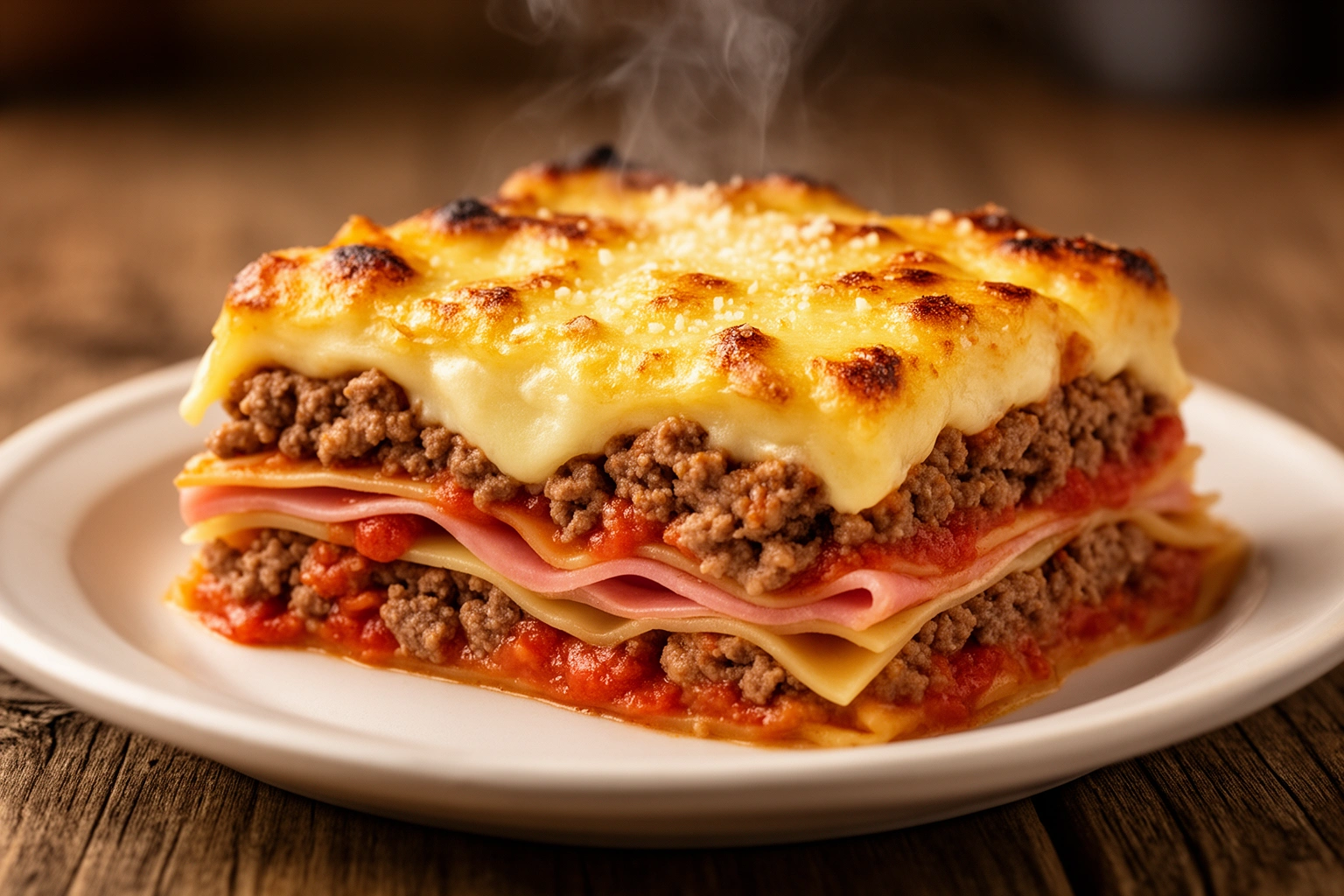
The first time most American diners encounter pasticho, they see it on a Venezuelan restaurant menu listed as “Venezuelan lasagna” and assume they know what it is. That assumption is reasonable. Pasta sheets, meat sauce, cheese, baked until golden. But the first bite recalibrates everything. The texture is silkier than any ricotta-based lasagna produces. The meat sauce carries cumin and a faint sweetness from a touch of sugar that Italian bolognese never includes. There are layers of thinly sliced ham between the pasta that add a saltiness and depth no traditional lasagna contains. The béchamel is everywhere, binding the whole structure rather than appearing in a few discrete layers. The result tastes simultaneously familiar and completely new, which is exactly what makes the search for the best pasticho Venezuelan lasagna near me so persistent once someone has had it once.
Pasticho is Venezuela’s national comfort food in the same way that mac and cheese is American or shepherd’s pie is British: a dish every family makes slightly differently, served at every birthday, Christmas, and Sunday gathering, and capable of producing real nostalgia in anyone who grew up eating it. For the Venezuelan diaspora in the United States, which has grown dramatically over the past decade, pasticho carries both flavor memory and emotional weight. For American diners discovering it for the first time, it is simply one of the most satisfying baked pasta dishes available anywhere.
What Pasticho Actually Is
Pasticho (pronounced pah-STEE-choh) is Venezuela’s adaptation of Italian lasagna, built with flat pasta sheets, a cumin-seasoned ground beef and tomato sauce, thinly sliced ham layered between every pasta course, a generous béchamel sauce used throughout rather than ricotta, and a top crust of mozzarella and Parmesan baked to a golden bubble.
The dish’s origins trace directly to the waves of Italian immigrants who arrived in Venezuela after World War II seeking new opportunities. They brought their culinary traditions, including lasagna. As those recipes were adopted by Venezuelan home cooks across generations, they absorbed local flavors and ingredients. The dish evolved. The name shifted from lasagna to pasticho, a phonetic drift that occurred as Italian culinary vocabulary passed through Spanish-speaking kitchens over decades. The ham was added, reflecting Venezuelan cooking’s affection for pork products. The béchamel expanded from a supporting element to a structural one. The meat sauce developed its own distinct character through local spicing traditions. By the mid-20th century, pasticho was no longer an Italian dish prepared by Venezuelan families. It was a Venezuelan dish with Italian ancestry.
Venezuela was, at its economic peak, the world’s second-largest consumer of pasta per capita after Italy itself. Pasta dishes became deeply integrated into Venezuelan cuisine, and pasticho became the most beloved of all of them: a dish that appears at quinceañeras and New Year’s dinners, that grandmothers make in deep aluminum trays that feed thirty people, that Venezuelan emigrants recreate abroad as a way of holding onto home.

Pasticho vs. Italian Lasagna: Where They Actually Differ
The four structural differences between pasticho and Italian lasagna are: béchamel instead of ricotta as the primary dairy layer, thinly sliced ham between every pasta course, cumin and a touch of sugar in the meat sauce, and Worcestershire sauce or soy sauce added to the beef for umami depth.
Béchamel vs. Ricotta
This is the most important difference and the one that produces the most dramatically different eating experience. Traditional Southern Italian lasagna (the style most Americans grew up with) uses ricotta as the primary dairy layer between pasta sheets. Ricotta is granular, slightly grainy, and relatively dry. It creates a dense, firm texture and a mild, neutral flavor.
Pasticho uses béchamel, the butter-flour-milk white sauce, throughout the entire dish rather than in a single layer as it appears in some Northern Italian lasagna styles. The béchamel used in pasticho tends to be richer and more abundant than even its Italian counterpart, creating a silky, flowing creaminess that permeates every layer. A properly made pasticho slice should hold its shape when lifted but feel almost molten in the mouth, held together by the béchamel rather than the firmer ricotta structure. Restaurants that substitute ricotta in their pasticho are making a different dish.
The Ham Layers
Every authentic pasticho recipe includes thin slices of ham layered between the pasta sheets alongside the meat sauce. The ham is typically a mild, deli-style slice, not cured or smoked in the way that Italian prosciutto is. Its function is additive: a salty, savory counterpoint to the tomato meat sauce and the sweet richness of the béchamel. The ham layers are one of the elements Venezuelan home cooks identify most strongly as distinctly their own, differentiating the dish from any Italian lasagna they know. Restaurants that omit the ham are preparing a simplified version.
The Meat Sauce Seasoning
Venezuelan meat sauce for pasticho uses ground beef (or sometimes a mix of beef and pork) with onion, garlic, tomatoes, and tomato paste as its base, similar to Italian bolognese. The departures from Italian tradition are specific: cumin appears in the spicing, reflecting Venezuelan cooking’s indigenous and colonial influences. A small amount of sugar is added to balance the tomato’s acidity, a common technique in Venezuelan cooking that produces a slightly sweeter flavor profile than Italian meat sauces. Worcestershire sauce and sometimes soy sauce appear in many family recipes for umami depth. Red wine deglazes the pan in some versions, as it does in Italian cooking, but the overall seasoning profile is distinctly Venezuelan.
The Cheese Combination
Most Venezuelan pasticho recipes use a combination of mozzarella and Parmesan, layered throughout and piled generously on top. The mozzarella provides the classic cheese-pull texture and mildness, while the Parmesan adds sharpness and helps the top develop a golden, slightly crisp crust. Some family recipes include other melting cheeses depending on regional preference and ingredient availability. The cheese layer on top should be thick enough to bubble and develop spots of golden-brown color in the oven.
| Feature | Venezuelan Pasticho | Italian Lasagna |
|---|---|---|
| Primary dairy layer | Béchamel throughout all layers | Ricotta (Southern style) or béchamel (Northern style) |
| Ham | Thinly sliced deli ham between every layer | Not traditional; absent in most versions |
| Meat sauce spicing | Cumin, sugar, Worcestershire, sometimes soy sauce | Oregano, basil, bay leaf; no cumin or sugar |
| Texture | Silky, flowing, almost molten from béchamel | Firmer, more structured from ricotta |
| Flavor profile | Rich, slightly sweet, cumin-forward | Acidic tomato-forward, herb-driven |
| Cultural role | Venezuelan national celebration dish | Italian regional classic; varies by region |
Where to Find the Best Pasticho Venezuelan Lasagna Near You in the US
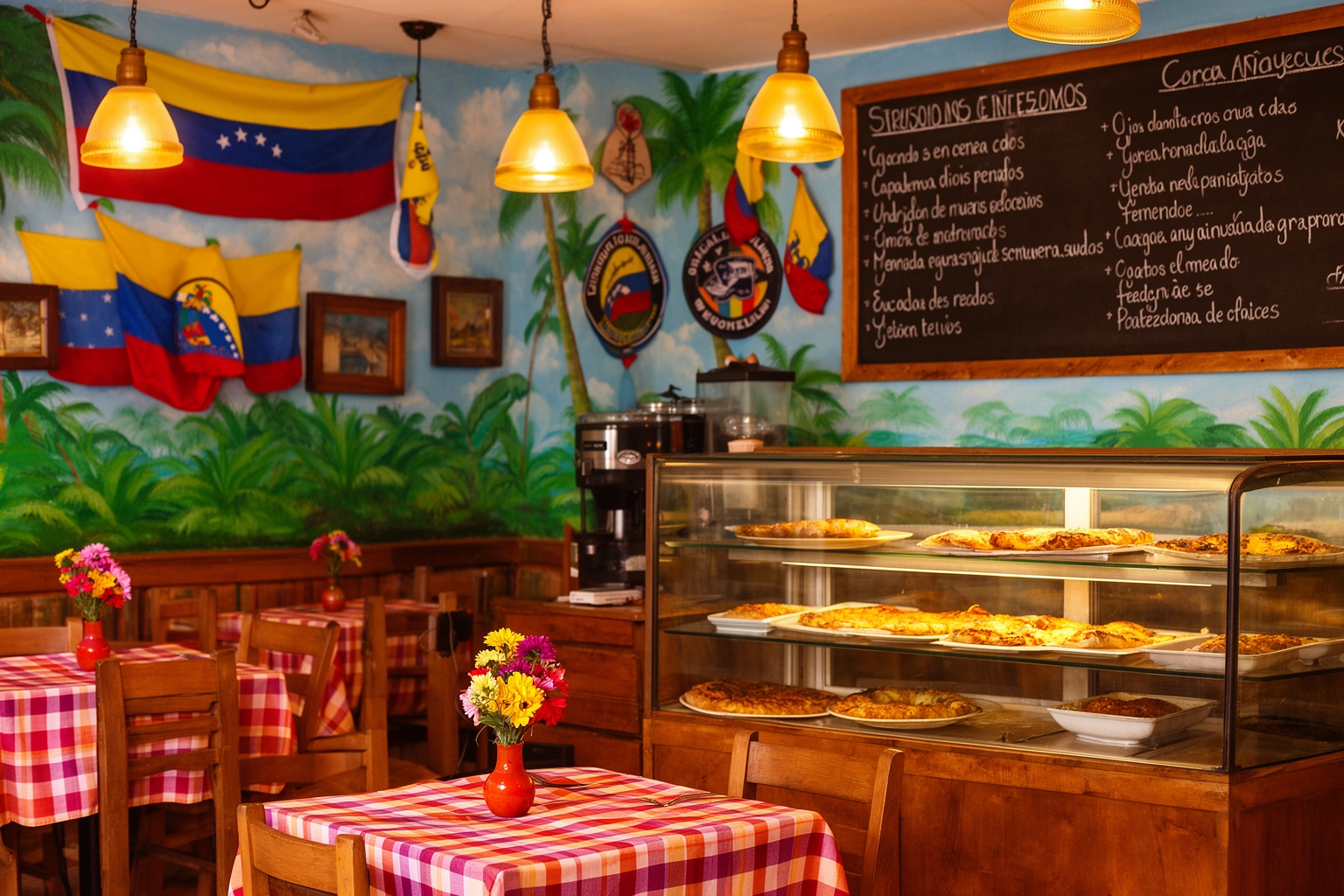
Miami’s Doral suburb is the undisputed capital of Venezuelan food in the United States, home to hundreds of Venezuelan restaurants in a neighborhood so heavily Venezuelan it has earned the nickname “Doralzuela.” Houston is the second-largest Venezuelan restaurant hub, followed by Charlotte, Atlanta, and New York City.
Miami and Doral, Florida: The Venezuelan Food Capital of the US
No other US city comes close to Miami for authentic Venezuelan food, and within Miami, Doral is the center. Florida accounts for a plurality of all Venezuelan restaurants in the US, and Doral’s concentration is extraordinary: a single ZIP code with hundreds of Venezuelan-owned restaurants, bakeries, markets, panaderías (bread bakeries), and cafés. The neighborhood earned the nickname “Doralzuela” from the Venezuelan community itself, reflecting how completely it has become a cultural home away from home.
Sabor Venezolano Doral, located at 10722 NW 74th St in Doral, is one of the most consistently recommended spots for traditional Venezuelan home cooking including pasticho. Bocas Grill operates multiple Miami-area locations in Kendall, Brickell, and Doral and ranks among the highest-reviewed Venezuelan restaurants in the country. PANNA Doral, which started as a café inside a service station and expanded into a beloved multi-location operation, serves traditional Venezuelan food with a strong local following. Doggi’s Arepa Bar, with multiple Miami-area locations, is an institution for Venezuelan street food and comfort cooking that often includes pasticho on rotating menus.
Yelp reviews for Venezuelan restaurants in Miami reveal the specific frustration that drives many searches: as one reviewer noted, while the city has an abundance of Venezuelan restaurants focused on arepas, cachapas, and empanadas, finding truly homey dishes like pasticho, milanesa, or asado negro requires seeking out specific spots. Restaurants that describe themselves as serving “comida casera venezolana” (Venezuelan home cooking) are the most likely to carry pasticho.
Houston, Texas
Houston has the second-largest concentration of Venezuelan immigrants in the US after South Florida. The city’s diverse Latin American food culture means Venezuelan restaurants there serve broader traditional menus that go beyond the arepa-focused spots common in other markets. Sabor Venezolano on Westheimer Road in the Energy Corridor area is a dedicated Venezuelan restaurant with a menu that includes pasticho alongside other traditional dishes. The Gulfton and Westheimer corridors support multiple Venezuelan operations ranging from panaderías to full-service restaurants. Houston’s Venezuelan community is active on social media and in local Spanish-language Facebook groups, which are a reliable source of current recommendations for where pasticho appears on any given week.
Charlotte, North Carolina
Charlotte has quietly become one of the most vibrant Venezuelan food destinations in the American Southeast, surprising visitors who expect the food scene to be dominated by barbecue alone. The city’s rapid population growth has included significant Venezuelan immigration, and the resulting restaurant scene punches well above its weight for a mid-size American city. Several Venezuelan restaurants in the south Charlotte and Ballantyne areas carry full traditional menus. Charlotte’s Venezuelan community is tight-knit and active in local food recommendations, making community Facebook groups and Venezuelan community organizations particularly useful for finding pasticho there.
New York City
New York has a significant Venezuelan population and a growing number of Venezuelan restaurants across all five boroughs. The challenge in New York is that the Venezuelan restaurant scene skews toward street food: arepas, cachapas, tequeños, empanadas, and patacones dominate most menus. Patacon Pisao NYC, operating since 2005 in Manhattan, is one of the most established Venezuelan restaurants in the city but focuses on its signature patacon sandwiches rather than baked dishes. Cachapas y Mas NYC and White Maize also operate in the city with traditional Venezuelan street food menus. Finding pasticho specifically in New York requires targeting the smaller, less-publicized Venezuelan family restaurants and home-cooking operations in the outer boroughs, particularly in Queens and the Bronx where Venezuelan families have established more complete community infrastructure.
Atlanta and Other Growing Markets
Atlanta’s Venezuelan food scene has grown substantially and now supports multiple full-service Venezuelan restaurants with traditional menus. The city’s Venezuelan community, like Charlotte’s, skews younger and has strong social media presence, making Instagram and Facebook the best tools for discovering current pasticho availability. Washington DC, Dallas, and Orlando also have meaningful Venezuelan restaurant infrastructure. In any city, the search approach is the same: target restaurants explicitly describing themselves as Venezuelan rather than broadly “Latin American,” look for the phrase “comida venezolana” or “cocina venezolana” in Google Business descriptions, and use Spanish-language community groups for the most current recommendations.
How to Search More Effectively
Searching Google Maps for “Venezuelan restaurant” combined with a direct call to confirm pasticho availability is more reliable than searching “Venezuelan lasagna near me,” which surfaces generic results. Instagram and Venezuelan community Facebook groups often reveal pasticho availability before restaurant websites do.
Pasticho shares the same discovery challenge as other home-style dishes in diaspora restaurant communities: it doesn’t always appear on printed menus or restaurant websites, because many Venezuelan restaurants treat it as a rotating daily special or weekend item rather than a permanent fixture. The dish takes several hours to prepare, and restaurants that make it properly tend to prepare it in batches. Calling ahead on the morning of a planned visit is the single most reliable confirmation method.
“comida venezolana near me,” “pasticho venezolano,” “Venezuelan restaurant” filtered by cuisine type on Google Maps, “cocina venezolana,” or “Venezuelan home cooking.” Searching specifically for “pasticho” in the review text of Venezuelan restaurant pages on Yelp or Google surfaces reviews from diners who ordered it specifically, which is a stronger quality signal than star ratings alone.
Delivery apps including DoorDash, Uber Eats, and Grubhub list Venezuelan restaurants in most major US cities, and pasticho sometimes appears on their menus as a daily special visible through the app before it’s listed anywhere else. Some Venezuelan food entrepreneurs operate entirely through Instagram and WhatsApp orders, taking weekly orders for homemade pasticho trays for family-size pickup or delivery. Following local Venezuelan food Instagram accounts and joining local Venezuelan community groups on Facebook often surfaces these home-cook operations, which frequently produce the most authentic pasticho available outside someone’s own kitchen.
What a Proper Pasticho Should Look and Taste Like
A properly made pasticho should hold its shape when sliced but feel silky and almost molten in the mouth from the béchamel. The top should be golden-brown and bubbly, the interior layers distinct and identifiable, and the ham visible between pasta and meat sauce.
The visual tells you a great deal before the first bite. A correctly baked pasticho has a golden-brown cheese crust on top with visible bubbling and some darker spots where the Parmesan caramelized. The interior, when sliced, shows distinct layers: pasta sheets, the dark-red meat sauce, pink ham slices, cream-colored béchamel. If the slice collapses into an undifferentiated mass, the béchamel was too thin or the dish wasn’t rested long enough after baking. A proper pasticho needs at least 10 to 15 minutes of resting before it can be sliced cleanly.
The flavor balance should feel rich and slightly sweet from the meat sauce’s sugar and the béchamel’s dairy, with a savory-salt counterpoint from the ham and cheese crust. The cumin in the meat sauce provides a warm earthiness that distinguishes it immediately from Italian seasoning profiles. The béchamel should taste of butter and milk rather than flour, which means it was cooked long enough to eliminate the raw flour taste. A béchamel that tastes starchy or paste-like was undercooked.
Portion size matters too. Venezuelan pasticho is not a delicate portion. The dish is designed to feed many people from a deep tray, and a restaurant slice should be thick enough to show all the interior layers clearly, generous enough to constitute a full meal, and moist enough that it doesn’t require extra sauce on the side. A thin, dry slice suggests either a rushed preparation or a version stretched to cover more portions than the recipe supports.
Pasticho Variations Found in Venezuelan Restaurants
Most Venezuelan restaurants offer the classic ground beef and ham version, but chicken pasticho, vegetarian pasticho, and “pasticho de pollo” appear on menus in cities with larger Venezuelan communities. Weekend-only and family tray formats are common for the most labor-intensive preparations.
Pasticho de Pollo
Chicken pasticho replaces the ground beef meat sauce with shredded chicken in a lighter tomato or cream sauce. The béchamel and ham layers remain, and the overall structure is the same. The flavor profile is milder and less rich than the beef version. Some Venezuelan restaurants offer it as a lighter alternative or as a weekday special when the full beef version isn’t being prepared.
Pasticho Vegetariano
Vegetarian pasticho substitutes the meat sauce with a vegetable-based filling, often mushrooms, zucchini, and peppers sautéed with onion, garlic, and tomato. The ham layers are omitted or replaced with thin slices of roasted eggplant in some versions. The béchamel and cheese structure remains intact. This version is less common in Venezuelan restaurants but appears in cities where health-conscious diners have created demand for it.
Family Trays
Many Venezuelan restaurants and home-cook caterers offer pasticho specifically in family tray format rather than by the slice: a full 9×13 or larger tray serving 8 to 12 people, ordered in advance and either picked up or delivered. This format reflects how pasticho is traditionally consumed in Venezuela: at a full family table, made in large quantities, serving multiple generations. Searching specifically for “pasticho tray” or “bandeja de pasticho” in Venezuelan community groups often surfaces these caterers, who are frequently not listed on standard food delivery apps or Google Maps.
Making Pasticho at Home When You Can’t Find It Nearby
Home pasticho is a 2-hour project building three separate components: a cumin-seasoned meat sauce, a butter-flour-milk béchamel, and the assembly of pasta, ham, cheese, and both sauces in a deep baking dish. The result serves 8 to 12 people and improves significantly reheated the next day.
For the meat sauce: brown ground beef with diced onion and garlic in olive oil. Add tomato paste, stir to coat, then add Worcestershire sauce, soy sauce, a splash of red wine, canned whole peeled tomatoes (crushed by hand), dried oregano, a tablespoon of granulated sugar, cumin to taste, a bay leaf, and fresh basil. Simmer 30 to 45 minutes until thick. The sauce should be rich and deeply flavored, not watery.
For the béchamel: melt butter in a heavy saucepan, whisk in all-purpose flour, and cook one to two minutes until the mixture smells slightly nutty. Add milk gradually while whisking constantly, preventing lumps. Cook over medium heat, stirring continuously, until the sauce thickens enough to coat the back of a spoon. Season with salt, white pepper, and a small grating of nutmeg.
Assembly in a deep 9×13 baking dish: start with a thin layer of béchamel on the bottom to prevent sticking. Add a layer of pasta sheets, then half the meat sauce, then a single layer of thinly sliced ham, then béchamel, then a third of the mozzarella and Parmesan. Repeat with pasta, remaining meat sauce, ham, béchamel, and another third of cheese. Finish with a final layer of pasta, the remaining béchamel covering completely, and the rest of the cheese. Cover with foil and bake at 375°F for 30 minutes, then remove the foil and bake another 15 to 20 minutes until the top is golden and bubbling. Rest 10 to 15 minutes before slicing.
Check These Related Articles
- The Invisible Infrastructure of Learning: Zlibrary Official Domain
- A Real Himalayan Journey Guide: Langtang Valley Trek and 7-Day Annapurna Base Camp Trek
- Navigating Travel and Venue Logistics for a Destination Wedding in Japan
- Why Phu Quoc Is Fast Becoming the Ultimate Luxury Escape in Southeast Asia
- Best Locro de Zapallo Near Me: How to Find Authentic Andean Pumpkin Stew in Any US City
The pattern of searching for authentic diaspora comfort food follows the same logic regardless of which cuisine you’re tracking. Our guide to finding locro de zapallo near you applies the same city-by-city search approach to Peruvian comfort food, including which search terms surface family-style cooking operations that don’t appear in standard Google Maps results. Both dishes share the same discovery challenge: the best versions come from home cooks and small family restaurants that invest in the preparation time the dish genuinely requires, and those kitchens are most efficiently found through community connections rather than standard search engines.
For anyone motivated to travel to find Venezuelan food in its most developed US form, Miami’s Doral neighborhood functions the way Lalín functions for cocido gallego, or Jackson Heights functions for Peruvian food in New York: a specific geographic zone where the concentration of authentic preparation is high enough that almost any restaurant will produce a credible version of the dish. Our guide to planning food-focused travel around specific culinary experiences covers how to structure a trip around a neighborhood food scene rather than individual restaurant reservations, which is the right approach to Doral.
The larger point about Venezuelan pasticho connects to what our piece on inherited skills explores: the recipes that survive migration and displacement do so because they carry real meaning, not just flavor. Pasticho is a dish that Venezuelan families recreate in Houston, Miami, Charlotte, and New York not simply because it tastes good, but because the act of making and sharing it is itself a form of continuity.
Frequently Asked Questions
What is pasticho Venezuelan lasagna?
Pasticho (pah-STEE-choh) is Venezuela’s adaptation of Italian lasagna, built with flat pasta sheets, a cumin-seasoned ground beef and tomato sauce, thinly sliced ham between every layer, a generous béchamel sauce used throughout rather than ricotta, and a mozzarella and Parmesan crust baked golden. It is Venezuela’s most beloved comfort food, served at family gatherings and celebrations.
How is pasticho different from Italian lasagna?
The four main differences are: pasticho uses béchamel throughout instead of ricotta; it includes thinly sliced ham between every pasta layer; the meat sauce is seasoned with cumin, sugar, and Worcestershire sauce rather than Italian herbs alone; and the overall texture is silkier and slightly sweeter than Italian lasagna.
Why does pasticho use béchamel instead of ricotta?
Béchamel is a butter-flour-milk white sauce that creates a silky, flowing creaminess throughout the dish. It is the structural dairy element in pasticho and produces a noticeably different texture from ricotta-based lasagna. A properly made pasticho should feel almost molten in the mouth because of the béchamel.
Where can I find the best pasticho Venezuelan lasagna near me in the US?
Miami’s Doral suburb, nicknamed ‘Doralzuela,’ has the highest concentration of Venezuelan restaurants in the US. Bocas Grill, Sabor Venezolano Doral, PANNA Doral, and Doggi’s Arepa Bar are among the most recommended spots. Houston is the second-largest Venezuelan hub, followed by Charlotte, Atlanta, and New York City.
How do I search for pasticho near me more effectively?
Search Google Maps for ‘Venezuelan restaurant’ and filter by cuisine type rather than searching for ‘Venezuelan lasagna near me.’ Also try ‘comida venezolana,’ ‘pasticho venezolano,’ or ‘cocina venezolana.’ Call the restaurant on the morning of your visit to confirm pasticho is available, as it is often a rotating daily special rather than a permanent menu item.
Can I make pasticho at home?
Yes, but it is a 2-hour project. You make a cumin-and-Worcestershire beef meat sauce, a butter-flour-milk béchamel, and assemble both with pasta sheets, sliced ham, mozzarella, and Parmesan in a deep baking dish. Bake covered at 375°F for 30 minutes, then uncovered 15 to 20 minutes until the top is golden. Rest 10 to 15 minutes before slicing.
What variations of pasticho exist?
Common variations include pasticho de pollo (chicken instead of beef), pasticho vegetariano (mushroom or vegetable filling, no ham), and family tray format serving 8 to 12 people, typically ordered in advance from Venezuelan restaurants or home-cook caterers. Weekend-only versions are common for the most carefully prepared batches.
What should a good pasticho look like?
A properly made pasticho should be golden-brown and bubbly on top with some darker spots from the Parmesan. The interior layers should be distinct and visible when sliced: pasta sheets, dark meat sauce, pink ham, cream béchamel. The slice should hold its shape when lifted but feel silky and rich in the mouth, not dry or stiff.