
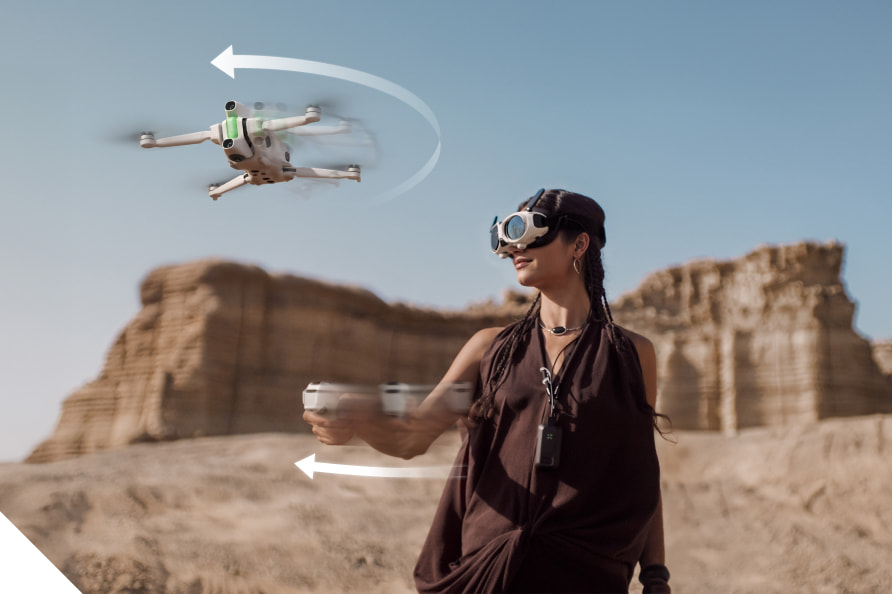
Antigravity A1 Vision Goggles and Goggles N3 deliver two clearly different FPV experiences. The main gap comes down to display technology, field of view, fit options, and how comfortable the goggles feel during longer sessions. Antigravity A1 Vision Goggles use a compact pancake optical system with a Micro-OLED display, a 90° diagonal field of view, adjustable IPD, and built-in diopter adjustment. Goggles N3 takes a more basic approach with a single 1080p LCD screen, a narrower 54° diagonal field of view, no IPD adjustment, and no diopter control. That means the difference is not just about image specs on paper. It affects immersion, clarity, facial pressure, and how easily each headset adapts to different users. For pilots choosing between them, those practical details matter most.
Understanding the Differences Between FPV Goggles
Why Display and Comfort Shape the Flying Experience
Display quality and comfort directly influence how natural FPV flying feels. A wider field of view can make motion appear more immersive and spatial awareness more intuitive, especially in fast turns or low-altitude flight. Antigravity A1 Vision Goggles push that experience further with a 90° diagonal FOV, which is substantially larger than the 54° diagonal view in Goggles N3. The display system also matters. A1 uses Micro-OLED and a pancake optical design, creating a thinner front profile and bringing the image closer to the eyes. Goggles N3 relies on a bulkier folded optical system and a 1080p LCD panel. Over time, those differences affect visual richness, headset size, face pressure, and how enjoyable longer flights feel.
What Pilots Should Compare Before Choosing Goggles
Pilots should compare more than headline resolution or battery life. The first priority is fit: adjustable IPD and diopter support can make a major difference in visual comfort and image alignment. The second is physical design, including total weight and how that weight is distributed between the face and head strap. The third is usability during and after flights, such as onboard recording, storage, external display support, and live view sharing. It also helps to consider whether you want practical convenience or a more premium viewing experience. In this comparison, the biggest dividing line is simple: Antigravity A1 Vision Goggles are built around personalization and immersion, while N3 emphasizes a more straightforward, less adjustable setup.
Design, Comfort, and Personalized Fit Features
Weight Balance and Long-Session Wearing Comfort
Weight alone does not decide comfort, but balance changes everything during extended use. Antigravity A1 Vision Goggles weigh 340.4 g with the spacer, face cushion, and head strap, and the battery sits separately in a split design. That reduces front heaviness and helps the goggles feel lighter on the face. Goggles N3 weighs 536 g including the battery and head strap, and its rear battery strap does not fully offset the bulk of the front housing. Size also plays a role. A1 is more compact overall, while Goggles N3 has a thicker body due to its folded refractive optical system. For longer sessions, the slimmer shape and better balance of A1 should feel less tiring and less pressure-heavy around the nose and cheeks.
IPD, Diopter Adjustment, and User Adaptability
Personalized fit is one of the clearest differences between these two goggles. Antigravity A1 Vision Goggles support IPD adjustment from 59–72 mm, giving users a way to align the image more accurately to their eyes. They also include diopter adjustment from +2.00 D to -5.00 D, with an official -3.00 D corrective lens option available. That built-in flexibility can reduce the need to wear glasses inside the headset. Goggles N3 does not support adjustable IPD or diopter tuning. Users instead need to wear their own prescription glasses, which can add facial pressure and may create fit issues if frames are large. For shared use, varied eyesight, or all-around adaptability, A1 offers a clearly more user-friendly solution.
Choosing the Right Goggles for Your Flying Style
When Immersion and Customization Matter Most
If your priority is a more immersive FPV view and a headset that adapts to different users, Antigravity A1 Vision Goggles are the stronger choice. The wider field of view creates a more open, enveloping image, while the Micro-OLED panel helps support a more premium visual experience when viewing footage from the drone camera. The compact design, separate battery layout, adjustable IPD, and built-in diopter controls also make A1 better suited to pilots who value comfort tuning rather than simply accepting a fixed fit. Extra features reinforce that positioning. A1 includes 30 GB of built-in storage, supports INSV recording, offers see-through view, and can show the live flight image on an external display for easy sharing. That combination favors users who want both immersive visuals and greater flexibility during their drone camera flights.
When Simplicity and Practical Features Are More Important
Goggles N3 makes more sense for users who care most about a straightforward setup and a few practical viewing functions rather than deep fit customization. Its battery life reaches 2.7 hours, slightly above the 2.5 hours listed for Antigravity A1 Vision Goggles under specified test conditions. It also supports a wired real-time video feed to a phone through USB Type-C, allowing a second live view through the DJI Fly app. Panoramic video playback is supported as well through a microSD card. That said, the tradeoff is clear: no adjustable IPD, no diopter adjustment, no built-in storage, no external display, and no see-through view. For users who accept a more basic fit and feature set, Goggles N3 remains functional, but it is less refined.
Conclusion
The difference between Antigravity A1 Vision Goggles and Goggles N3 is clear once you focus on actual use, not just spec labels. Antigravity A1 Vision Goggles deliver the more advanced experience, with a lighter and better-balanced design, wider field of view, sharper per-eye display setup, and meaningful fit adjustments that improve comfort for more users. Goggles N3 covers essential viewing needs and adds wired phone monitoring, but it gives up personalization, compactness, and immersion. For pilots who want goggles that feel easier to wear, look more expansive in flight, and adapt better to different eyesight needs, Antigravity A1 Vision Goggles are the better option. Goggles N3 is the simpler alternative, but A1 stands out as the more complete and user-focused FPV goggle design.


