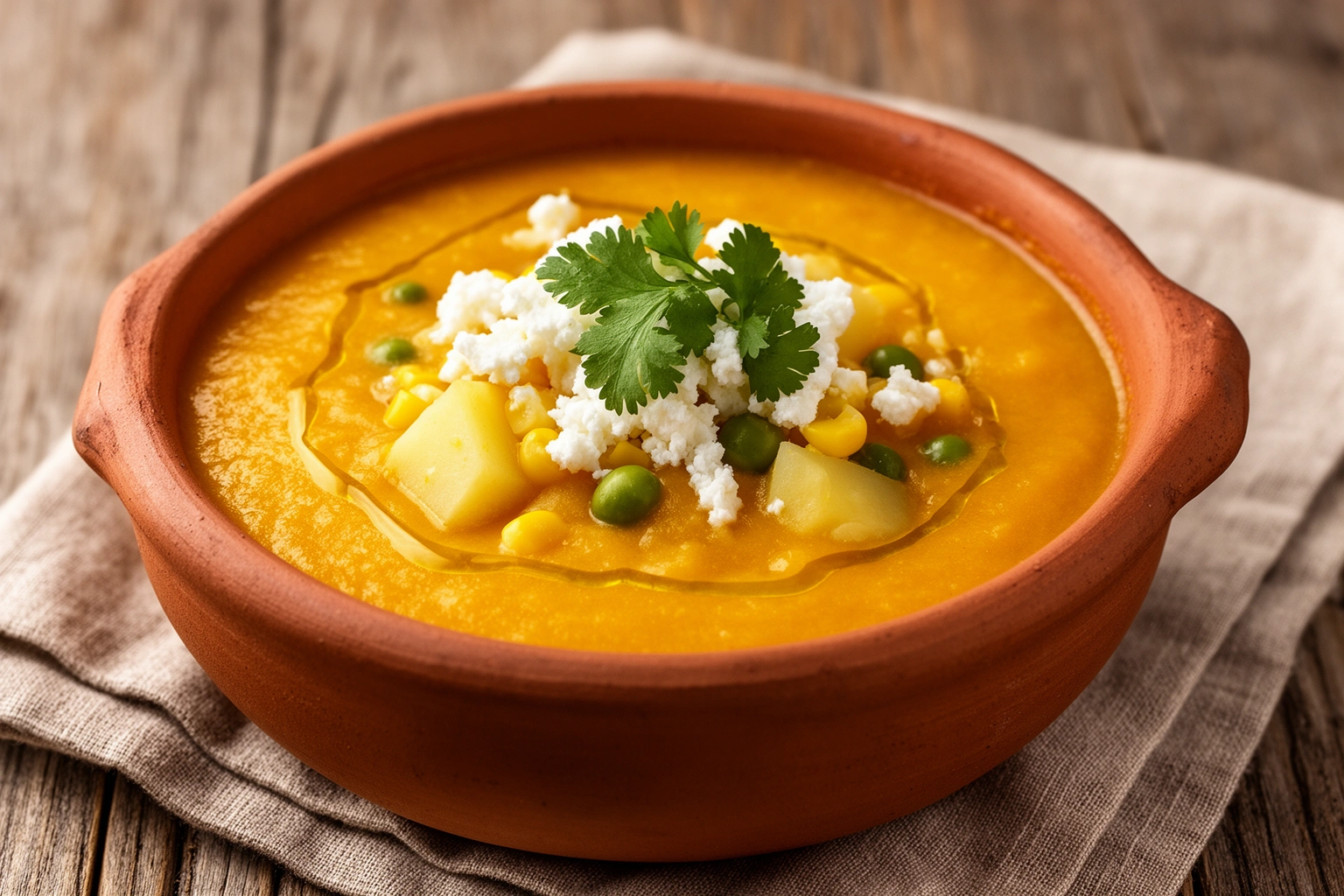
Locro de zapallo is the kind of dish that stops you mid-bite. The color alone is striking: a deep, vivid orange that comes entirely from squash and ají amarillo, not a drop of artificial color. The texture is thick and spoonable, nothing like the thin pumpkin soups that appear on American menus in October. Each bowl contains potato pieces that hold their shape in the creamy base, corn kernels with a slight chew, peas, and a generous crumble of queso fresco on top. Anyone who grew up eating it in Peru or in a Peruvian household will tell you it belongs in the same conversation as ceviche and lomo saltado. Everyone else is still finding out about it.
The search for the best locro de zapallo near me has grown steadily as Peruvian cuisine earns serious international recognition. Lima has appeared on lists of the world’s best dining cities for well over a decade, and the food attention it receives has gradually pushed awareness of traditional Peruvian home cooking beyond the restaurant showpieces. Locro de zapallo is not a showpiece dish. It is Andean comfort food, made in home kitchens every week, eaten with rice alongside or scooped up with bread. Finding a good version in the US takes some knowledge of where to look and what to look for. This guide provides both.
What Locro de Zapallo Actually Is
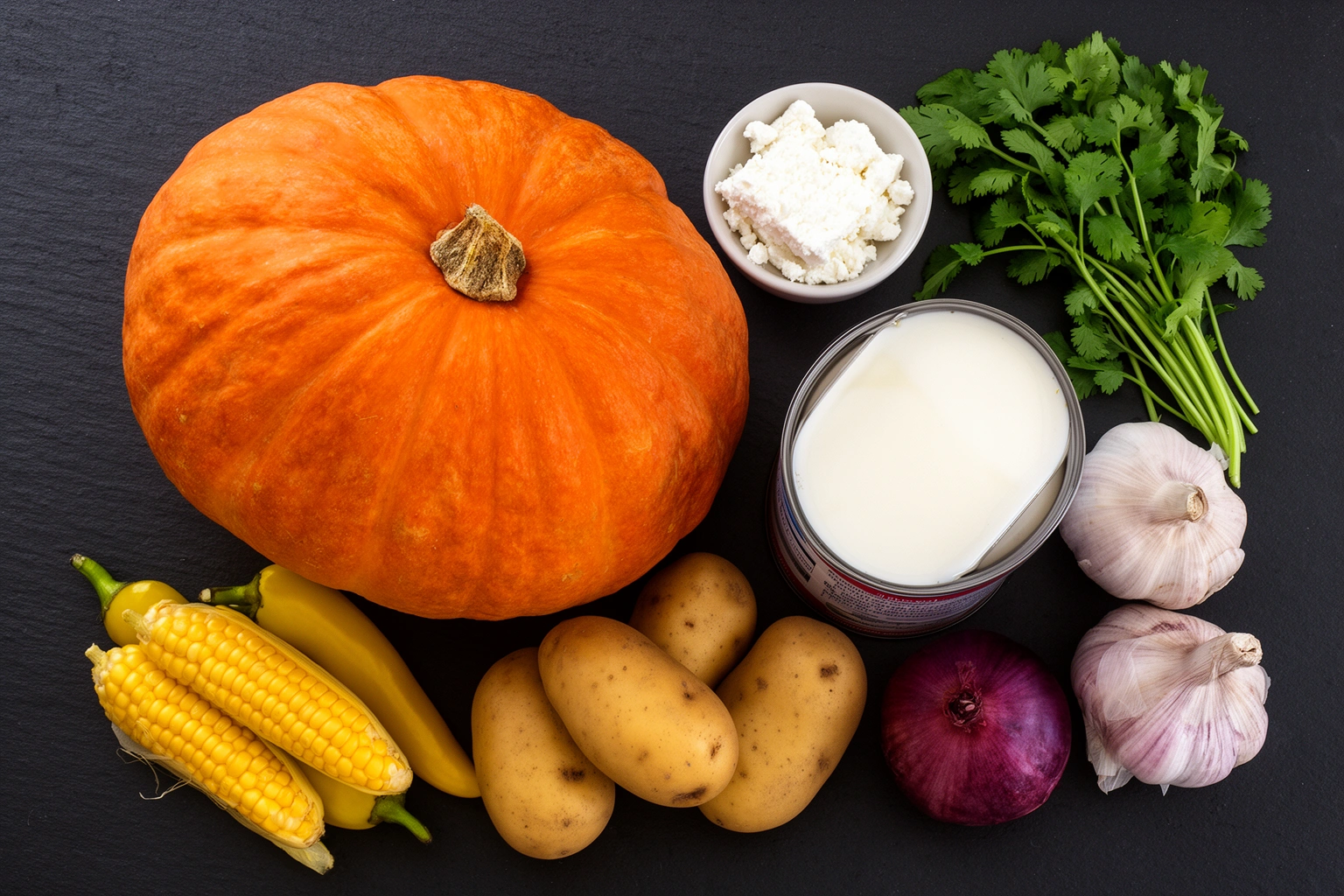
Locro de zapallo is a thick, slow-cooked Peruvian pumpkin stew built on zapallo squash, ají amarillo paste, onion, garlic, potatoes, corn, peas, evaporated milk, and queso fresco. The squash breaks down completely during cooking to form a naturally creamy, vivid orange base.
The word locro traces to the Quechua term luqru, documented in Spanish missionary writings from as early as 1590. Original Andean preparations used potatoes as the primary base, with pumpkin as a secondary ingredient. Over centuries, the zapallo squash moved to the center, and European colonial contact introduced evaporated milk and cheese, both now standard in the Peruvian version. The result is a dish with pre-Hispanic roots and Spanish colonial finishing, which is the story of much of Peruvian cuisine.
The flavor structure is built in layers. Diced red onion, garlic, and ají amarillo paste are bloomed together in oil to form the aderezo, the flavor base used across Peruvian cooking. Cumin and sometimes dried oregano go in at this stage. The zapallo is added next and cooked down slowly until it begins to collapse into the oil, absorbing the aderezo and releasing its natural sweetness. Potatoes and corn join partway through to preserve their texture. Evaporated milk and queso fresco finish the stew, creating richness without heaviness. The whole process takes 35 to 50 minutes but cannot be rushed: the squash needs time to fully break down rather than sitting in chunky pieces.
Ají amarillo is the defining flavor component. This yellow Peruvian chili pepper, cultivated in the Andes for at least 4,000 years, contributes fruity heat and a vivid orange-yellow pigment that gives locro de zapallo much of its visual identity. Without it, the dish loses its character entirely. It is also irreplaceable: no other chili pepper produces the same combination of fruity warmth and color. Jarred ají amarillo paste, imported from Peru, is now widely available at Latin American grocery stores and online, making it accessible to home cooks and restaurateurs outside Peru.
Peruvian Locro de Zapallo vs. Argentine Locro: Two Completely Different Dishes
Peruvian locro de zapallo is a dairy-finished pumpkin stew flavored with ají amarillo. Argentine locro is a meat-heavy winter stew built on white corn, beans, chorizo, and multiple pork cuts. They share a name and Andean origins but are otherwise entirely different dishes.
The confusion appears constantly on English-language menus and food search results. Some generic Latin American restaurants serve Argentine-style locro under the Peruvian label. Others list a squash soup under the Argentine name. Understanding the difference before you visit saves real disappointment.
| Feature | Peruvian Locro de Zapallo | Argentine Locro |
|---|---|---|
| Primary base | Zapallo pumpkin | White corn (maíz blanco) + beans |
| Protein | Optional: shrimp, chicken; often vegetarian | Chorizo colorado, panceta, beef ossobuco |
| Key chili | Ají amarillo paste | Pimentón (smoked paprika); side quiquirimichi |
| Dairy finish | Evaporated milk and queso fresco | No dairy; served with bread |
| Texture | Thick, creamy, smooth orange base | Hearty, chunky, deeply savory |
| Cultural role | Everyday Peruvian home cooking | Argentine national dish; May 25 and July 9 holidays |
Argentine locro is a full winter feast in its own right, with beef cuts, chorizo colorado, soaked white beans, and hominy simmering for hours. It is served on Argentina’s patriotic holidays (May 25 and July 9) with a fiery quiquirimichi sauce on the side. It is a fantastic dish. It is simply not the same thing as Peruvian locro de zapallo, and a restaurant selling one under the name of the other is either confused or cutting corners. When searching locally, confirming the restaurant’s country focus before visiting is essential: Peruvian or Andean restaurants for locro de zapallo, Argentine parrillas for the white corn and meat version.
Where to Find Locro de Zapallo Near You in the US
New York City, Los Angeles, Miami, Houston, and Washington DC have the strongest concentrations of Peruvian restaurants in the US. These five markets are the most reliable hunting grounds for authentic locro de zapallo, with family-owned comida criolla spots being the most dependable source.
New York City
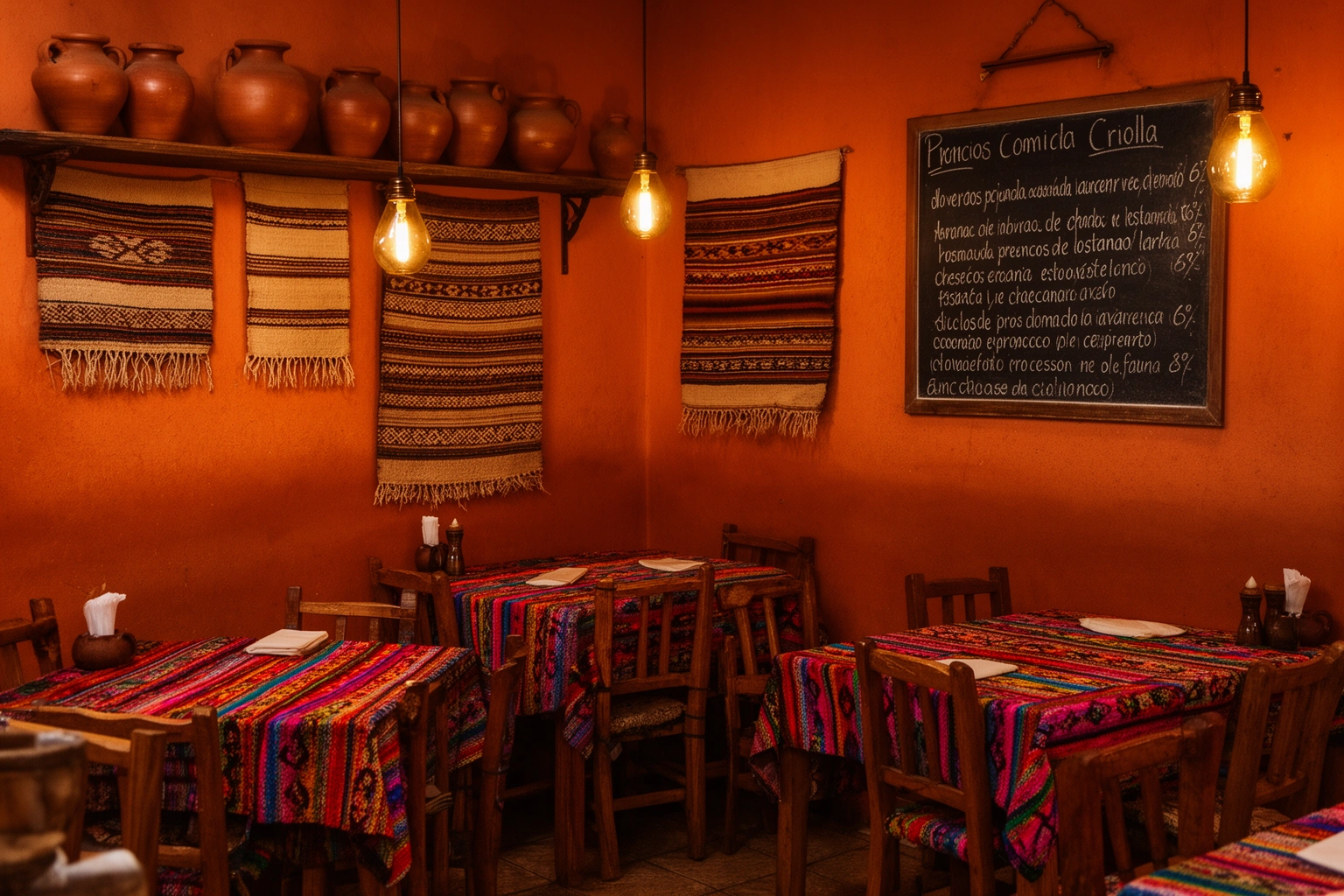
New York has the largest and most developed Peruvian restaurant ecosystem in the country. Queens is the center of it, particularly the Jackson Heights and Woodside neighborhoods, where Peruvian families have operated restaurants and bodegas for decades. These are not upscale spots built for tourists. They serve rotating daily menus (menú del día) with traditional Peruvian home cooking, and locro de zapallo appears regularly as a lunch special. Look for small, unlabeled storefronts with handwritten menus in Spanish and no English-language web presence. These places are where the dish is most likely to appear in its most genuine form.
Manhattan has its own Peruvian restaurants, including Pio Pio, Flor de Mayo (which blends Peruvian and Chinese-Peruvian traditions), and Kausa, which focuses specifically on elevated Peruvian cooking including traditional stews. The Bronx and parts of Brooklyn also support smaller Peruvian restaurants that rotate traditional dishes. Searching Google Maps for “comida criolla” alongside the borough name produces better results than searching for “Peruvian restaurant,” which tends to surface tourist-oriented spots where locro is less likely to appear.
Los Angeles
Los Angeles has a meaningful Peruvian population concentrated in Lawndale, Torrance, and parts of the San Fernando Valley. The most promising spots are family-run lunch counters identified by signage advertising “pollo a la brasa” or “menú del día,” which signal a traditional Peruvian menu rather than an export version built around ceviches and fusion dishes. South Bay in particular has a cluster of these spots. Latin American grocery stores in these neighborhoods also sometimes carry locro de zapallo at prepared food counters, a useful option when restaurants aren’t serving it on a given day.
Miami
Miami’s Latin American diversity includes a significant Peruvian community, most concentrated in Doral and Kendall. Peruvian restaurants in these neighborhoods run broader traditional menus than the downtown and Brickell spots, which tend toward Peruvian-fusion. Miami’s Peruvian cultural associations occasionally organize community meals where dishes like locro de zapallo are cooked in large batches from traditional family recipes, producing the most authentic versions available outside a home kitchen. Following local Spanish-language Peruvian community groups on social media is the best way to learn about these events.
Houston
Houston’s southwest corridor, particularly around Gulfton and Westheimer, has developed into one of the most diverse Latin American food districts in the US. Peruvian restaurants operate here among Colombian, Venezuelan, and other South American spots, and the menus tend to be traditional rather than tourist-facing. The density of the neighborhood food culture means locro de zapallo shows up as a regular rotating special at several spots rather than being confined to a single restaurant.
Washington DC
Washington DC has developed a notable Peruvian restaurant scene anchored partly by El Secreto de Rosita, a traditional Peruvian restaurant that earned a Michelin Bib Gourmand in 2022 for serving genuinely traditional Andean cooking rather than an Americanized menu. DC’s Peruvian community is smaller than NYC’s or LA’s but increasingly well-served by dedicated restaurants. Northern Virginia suburbs also carry Peruvian spots worth investigating.
How to Search More Effectively (Beyond “Peruvian Restaurant Near Me”)
Searching Google Maps for “comida criolla” or calling candidate restaurants directly to ask about daily specials produces far better results than generic Peruvian restaurant searches. Instagram stories from Peruvian restaurants are the fastest real-time indicator of whether locro de zapallo is on the menu on a given day.
The locro de zapallo problem is that it is a home-style dish treated as a rotating special, not a permanent menu fixture. Many Peruvian restaurants only serve it on certain days of the week or when the kitchen decides to make a batch. No amount of review-reading will tell you whether it is available today. The only reliable method: call the restaurant that morning and ask specifically whether locro de zapallo is on the lunch or dinner menu that day.
Search terms that surface more traditional restaurants than “Peruvian food near me”: “comida criolla near me,” “menú peruano,” “locro de zapallo” with a city name, or “pollo a la brasa” (which signals a traditional Peruvian operation). Any restaurant using these phrases in its Google Business profile is communicating that its kitchen is oriented toward traditional cooking. Restaurants that describe themselves exclusively with English-language upscale adjectives (“elevated Peruvian,” “modern Lima cuisine”) are less likely to serve locro as a regular option.
Grocery stores serving Peruvian communities often rotate traditional dishes through their prepared food sections, including locro de zapallo on days when a home cook has prepared a batch. The dish holds well for same-day reheating without losing its texture. This is often the most affordable and authentically prepared version available outside a home kitchen.
What a Proper Bowl Should Look and Taste Like
Authentic locro de zapallo should be thick and vibrantly orange-yellow, with distinct potato pieces, corn kernels, and peas suspended in a creamy squash base, topped with crumbled queso fresco. A watery, pale, or uniformly smooth version indicates shortcuts or wrong ingredients.
Color is the first quality signal before the first bite. A properly made locro achieves its vivid orange-yellow from quality zapallo or kabocha squash combined with ají amarillo bloomed in oil. Restaurants that use pale orange squash, minimal ají amarillo, or low-quality canned pumpkin produce a muted brownish result that lacks the dish’s visual and flavor identity. If the bowl looks like butternut squash soup, something went wrong at the ingredient stage.
Texture is the second check. Locro de zapallo should be thick and spoonable, coating the back of a spoon but not gummy or starchy. The base should feel creamy from the evaporated milk and queso fresco rather than from butter or heavy cream (neither belongs in the dish). Individual potato pieces should be tender but intact, not dissolved into the base. Corn kernels should have a slight chew. Peas should be soft but not mushy.
The flavor order in a well-made bowl: initial sweetness from the squash and corn, then the fruity warmth of ají amarillo building at the back of the throat, then a mild dairy richness from the milk and cheese, finishing with a salty freshness from the queso fresco garnish. Nothing should be sharp, acidic, or aggressively spiced. Locro de zapallo is a gentle stew. Its heat comes from ají amarillo’s fruity warmth rather than sharp chili burn.
Traditional service includes steamed white rice alongside, or sometimes bread. Many Peruvian families also add a fried egg on top of the locro, which is an excellent addition that richer restaurant versions sometimes overlook. A fresh garnish of chopped cilantro or huacatay (Peruvian black mint, available frozen at Latin markets) adds brightness that lifts the whole bowl.
Red Flags: How to Identify an Inauthentic Version
Locro de zapallo served as a thin soup, missing queso fresco, or described without any mention of ají amarillo has been simplified to the point where it no longer represents the actual dish. Watery texture and pale color are the two most reliable negative signals before ordering.
Menu Language Red Flags
Descriptions that call it “pumpkin soup” rather than “pumpkin stew” signal a thinner preparation. Menus that don’t mention ají amarillo, queso fresco, or potatoes in the description are often signaling a simplified version built for general American palates. Any listing that describes it as “spicy” is mischaracterizing the dish: locro de zapallo is mildly warm from ají amarillo but not hot. Restaurants that use “pumpkin soup” and “locro de zapallo” interchangeably on their menus may not understand that the two preparations are different things.
Texture and Color at the Table
A poured, thin broth means the squash was not cooked long enough, too much liquid was added to stretch portions, or the wrong type of squash was used (watery varieties like zucchini cannot produce the creamy base that dense winter squash creates). The spoon test works: lift a spoonful and watch how it falls back. Real locro holds briefly before settling. Poor locro runs immediately like water.
Pale or beige-toned locro lacks adequate ají amarillo. The color is not decorative: it signals the presence of the chili that defines the dish’s flavor profile. A bowl without the vivid orange-yellow hue will almost certainly taste flat, missing the fruity depth that sets locro de zapallo apart from generic squash soup.
Watery or Bland Versions
Restaurants that serve locro year-round as a permanent menu item, available daily, are often working from a simplified batch recipe rather than a kitchen that genuinely understands the dish. Traditional locro de zapallo rewards making in moderate quantities with fresh squash and proper technique. Kitchens that produce it daily in large batches frequently compromise texture by using canned pumpkin, pre-blended bases, or insufficient cooking time. The dish’s availability as a rotating special, rather than a constant, is itself a quality signal.
Locro de Zapallo Variations Worth Knowing
The basic vegetarian version is the most common and traditional. Regional and restaurant variations add proteins and adjust the spice level without altering the fundamental squash-ají amarillo base.
With Shrimp
Locro de camarones adds fresh or dried shrimp to the base, a variation common in coastal Peruvian cities where seafood is more available than in highland regions. Dried shrimp (camarones secos) are added early to infuse the oil alongside the ají amarillo, adding a deep oceanic umami that plays off the squash’s sweetness. Fresh shrimp go in at the end, just before serving, so they stay tender.
With Chicken
A chicken variant uses shredded braised chicken folded into the finished stew, making the dish more substantial without changing the flavor base. This version is the most common restaurant adaptation for diners who want protein without seafood.
With Broad Beans (Habas)
The locro de zapallo con habas variation adds whole broad beans alongside the chickpeas and corn for an extra layer of texture and protein. This preparation appears more often in highland Peruvian cooking where legumes are a staple source of protein. The beans add a slight earthiness that contrasts with the squash’s sweetness.
Vegan Adaptation
The basic locro de zapallo is easily made vegan by omitting the evaporated milk and queso fresco and substituting unsweetened oat milk or almond milk, with a firm salty tofu crumble replacing the cheese. The flavor remains intact if the ají amarillo base is properly built. Restaurants serving the vegan version should still use vegetable stock rather than chicken stock as their liquid base.
Making Locro de Zapallo at Home
Home locro de zapallo takes about 45 minutes of active cooking and requires only a handful of ingredients, all available at Latin American grocery stores or online. The technique is straightforward: bloom the aderezo, cook down the squash, add potatoes and corn, finish with dairy.
Start by blooming the aderezo: sauté diced red onion in vegetable oil over medium heat until soft (about 8 minutes). Add minced garlic, a tablespoon of ají amarillo paste, and a half teaspoon each of cumin and dried oregano. Cook one additional minute until fragrant. Add diced zapallo or kabocha squash and stir to coat in the aderezo. Cook 5 minutes until the squash begins to release liquid and absorb the chili color.
Add enough water or vegetable stock to cover, bring to a simmer, and cook 15 to 20 minutes until the squash is completely tender and beginning to collapse. Use a wooden spoon or potato masher to crush some of the squash against the pot sides to thicken the base. Add diced waxy potatoes, frozen or fresh corn kernels, and frozen peas. Simmer another 10 minutes until the potatoes are just tender. Pour in half a cup of evaporated milk and stir gently. Season with salt. Serve immediately in wide bowls, topped generously with crumbled queso fresco and chopped cilantro. Rice alongside is standard; a fried egg on top is optional and excellent.
Ají amarillo paste is the ingredient most likely to require a specialty store or online order. Many Latin American grocery stores carry it, and Peruvian food importers ship it widely. Some stores also stock whole fresh ají amarillo peppers; these can be roasted, skinned, and blended into paste. The frozen version maintains good flavor. Avoid substituting with generic yellow chili paste or turmeric: neither replicates ají amarillo’s fruity, fruity heat and color.
Check These Related Articles
- The Invisible Infrastructure of Learning: Zlibrary Official Domain
- A Real Himalayan Journey Guide: Langtang Valley Trek and 7-Day Annapurna Base Camp Trek
- Navigating Travel and Venue Logistics for a Destination Wedding in Japan
- Why Phu Quoc Is Fast Becoming the Ultimate Luxury Escape in Southeast Asia
- Resilience as an Inherited Skill
The framework for tracking down an authentic regional dish applies across cuisines. Knowing what the dish is supposed to be, which cities have the infrastructure to serve it properly, and how to read menus and reviews for quality signals is the same research process whether you are chasing locro de zapallo in Queens, cocido gallego in a Galician taberna, or planning a food-first trip to a region you have never visited. Our guide to planning destination travel logistics covers how to structure a trip around experiences that are place-specific and hard to replicate elsewhere, which is exactly what a food trip to Lima or Cusco to eat locro in its home context would involve.
Regional Andean cuisine shares the same philosophical roots as the slow-food traditions covered in our guide on culinary travel in Southeast Asia: the most satisfying eating experiences come from food tied specifically to place, agricultural tradition, and community. Locro de zapallo is Andean in every ingredient, from the zapallo squash domesticated in the Americas thousands of years before European contact to the ají amarillo cultivated in the same highland valleys for millennia.
The patience required to find a genuinely good bowl near you is worth it. Some things take time and persistence, and the best version of locro de zapallo near you may require a few calls, a trip to an unfamiliar neighborhood, or following a Peruvian community group online until someone announces a batch. That search is part of the reward.
Frequently Asked Questions
What is locro de zapallo?
Locro de zapallo is a traditional Peruvian pumpkin stew made with zapallo squash, ají amarillo paste, onion, garlic, potatoes, corn, peas, evaporated milk, and queso fresco. The squash cooks down into a thick, creamy orange base over 35 to 50 minutes of slow simmering.
Is locro de zapallo the same as Argentine locro?
No. Peruvian locro de zapallo is a dairy-finished pumpkin stew flavored with ají amarillo. Argentine locro is a meat-heavy winter dish built on white corn, beans, chorizo, and pork cuts. They share Andean origins and a name but are completely different dishes.
Where can I find locro de zapallo near me in the US?
New York City (Queens neighborhoods like Jackson Heights and Woodside), Los Angeles (South Bay and San Fernando Valley), Miami (Doral and Kendall), Houston (Gulfton corridor), and Washington DC have the strongest Peruvian restaurant scenes. Search Google Maps for comida criolla rather than generic Peruvian restaurant.
What is ají amarillo and why does it matter?
Ají amarillo is a Peruvian yellow chili pepper cultivated in the Andes for thousands of years. Its paste forms the flavor and color foundation of locro de zapallo, contributing fruity warmth and the dish’s vivid orange-yellow hue. Without it the dish loses its defining character.
What should authentic locro de zapallo look like?
A proper bowl should be thick and vibrantly orange-yellow, not thin like soup. Visible potato pieces, corn kernels, and peas should be suspended in the creamy squash base, topped with crumbled queso fresco and fresh cilantro. Pale, beige, or watery versions indicate shortcuts or wrong ingredients.
Is locro de zapallo vegetarian?
The traditional Peruvian version is naturally vegetarian, built on squash, potatoes, corn, peas, evaporated milk, and queso fresco. Common protein additions include shrimp or chicken. A fully vegan version replaces the dairy with plant-based milk and omits the cheese.
What squash can I use instead of zapallo macre?
Kabocha and butternut squash are the closest substitutes outside South America. Both have dense, sweet orange flesh that produces a similar creamy texture when slow-cooked. Avoid watery varieties like zucchini or delicata squash, which lack the density needed for the stew’s consistency.
Can I make locro de zapallo at home?
Yes. The method is straightforward: bloom ají amarillo paste with onion and garlic, cook down diced squash until it collapses, add potatoes and corn, then finish with evaporated milk and queso fresco. The key ingredient is jarred ají amarillo paste, available at Latin American grocery stores or online.