Most people searching for the best ensalada de garbanzos near me have a specific memory driving the search: a tapa they ordered once at a Spanish restaurant, ate almost by accident, and then couldn’t stop thinking about. The dish is deceptively simple. Chickpeas, olive oil, vinegar, peppers, onion, herbs. But the Spanish version, served at room temperature after the flavors have had time to merge, tastes nothing like the cold chickpea bowls assembled at salad bars or the canned-bean side dishes at casual Mediterranean chains. The gap between the two is the sherry vinegar. And the piquillo peppers. And the quality of the olive oil. And often, the ventresca tuna sitting on top.
Ensalada de garbanzos is a foundational dish in Spanish home cooking and tapas culture, with the clearest regional identity in Castilla-La Mancha, Andalusia, and Aragón, all of which produce excellent chickpeas and have deep traditions of legume-based cooking. Finding a genuinely made version in the US takes knowing which restaurant type to target, which ingredients signal authenticity, and what the dish should taste, smell, and look like before the first bite. All of that is covered here.
What Ensalada de Garbanzos Actually Is
Authentic ensalada de garbanzos is a Spanish room-temperature chickpea salad dressed with extra virgin olive oil and sherry or red wine vinegar, built around roasted piquillo peppers, red onion, diced tomato, flat-leaf parsley, and often ventresca tuna, hard-boiled egg, or salt cod. Served as a tapa or light main course, never as a cold fridge salad.
The dish has roots in the Spanish tradition of legume cooking that stretches back centuries. Chickpeas (garbanzos) have been cultivated in the Iberian Peninsula since at least the Bronze Age, and the Castilla-La Mancha region produces some of the finest dried chickpeas in the world: the Garbanzo de Pedrosillano, a small, dense variety prized for its smooth skin, creamy interior, and ability to hold its shape after long cooking. Restaurants that source Spanish chickpeas, or at minimum use quality dried chickpeas cooked from scratch, start with a structural advantage that canned-chickpea versions cannot match regardless of how good the dressing is.
The dressing is where Spanish ensalada de garbanzos separates from generic Mediterranean chickpea salad. Sherry vinegar (vinagre de Jerez) from the Jerez-Xérès-Sherry denomination in Andalusia adds a nutty, complex acidity that red wine vinegar and lemon juice cannot replicate. Aged sherry vinegar in particular carries a depth developed from years in oak barrels, which produces a rounder, less sharp acid than standard wine vinegars. Restaurants using sherry vinegar in their ensalada de garbanzos are signaling Spanish kitchen knowledge. Restaurants using generic red wine vinegar are approximating it. Restaurants using lemon juice are making a different dish.
Piquillo peppers are the second defining ingredient. Sourced from Navarra in northern Spain, piquillos are small, fire-roasted red peppers with a sweet, mildly smoky flavor completely different from standard jarred roasted peppers. They are packed in their own juices, not brine, and their flavor integrates into the oil-vinegar dressing in a way that adds depth without sharpness. Substituting with generic roasted red peppers produces a noticeably flatter result.

The Key Ingredients That Define an Authentic Version
Six components define a genuinely Spanish ensalada de garbanzos: quality chickpeas cooked until tender but firm, sherry vinegar, extra virgin olive oil, piquillo or roasted red peppers, flat-leaf parsley, and at least one optional protein addition such as ventresca tuna, hard-boiled egg, salt cod, or good-quality canned tuna.
Chickpeas: Dried vs. Canned
Dried chickpeas soaked overnight and cooked from scratch produce a texture no canned product can match: a firm but creamy interior with an intact skin that holds the dressing without going mushy. The cooking liquid itself, reserved after cooking, can be used to add extra chickpea flavor to the dressing. Most restaurants use good-quality canned chickpeas for speed, which is acceptable when the brand quality is high (Goya’s garbanzo line, Alubia’s Spanish imports, or similar). The red flag is chickpeas that feel mushy, fragmented, or taste of tin rather than legume. Restaurants that specify “house-cooked chickpeas” on the menu or in response to a question are making a meaningful commitment.
Ventresca Tuna
Ventresca is the belly cut of Bonito del Norte (white tuna), packed in olive oil, and considered the finest canned tuna in Spanish cuisine. The texture is silky rather than flaky, the flavor is mild and rich, and the olive oil it’s packed in contributes directly to the salad dressing when the can is drained over the bowl. Restaurants that use ventresca specifically rather than standard canned tuna in water are making an ingredient decision that significantly improves the dish. Ortiz and Conservas Serrats are the most widely distributed Spanish ventresca brands in the US, available at specialty food stores and Spanish import retailers.
Salt Cod (Bacalao)
The Andalusian and Castilian versions of ensalada de garbanzos often include desalted, flaked bacalao (salt cod) rather than tuna, particularly in regions with strong bacalao traditions. Bacalao adds a brininess and firm texture that works differently from tuna, and restaurants specializing in regional Spanish cooking may offer both versions depending on the season or the chef’s background. Bacalao-based ensalada de garbanzos is less common in the US than the tuna version, but its presence on a menu signals genuine Spanish regional knowledge.
Serving Temperature
A correct ensalada de garbanzos is served at room temperature, not cold from the refrigerator. The oil should be fluid, the chickpeas should feel warm from ambient temperature, and the aromatics should smell fresh and open. Cold fridge temperature suppresses the olive oil’s fragrance, mutes the sherry vinegar’s complexity, and makes the chickpeas feel dense and unappetizing. Spanish cooks typically dress the salad 15 to 30 minutes before serving to allow the chickpeas to absorb the dressing and the flavors to meld. A restaurant that pulls the dish from a cold case and plates it immediately is skipping this resting step.
Ask the server whether the ensalada de garbanzos is served at room temperature or cold. Any kitchen that serves it cold from a refrigerated case has likely skipped the resting step that allows the flavors to develop. A dish served at room temperature with liquid olive oil that moves freely in the bowl is almost always made with more care.
Regional Versions Across Spain
Castilla-La Mancha, Andalusia, and Aragón produce the most well-defined regional versions of ensalada de garbanzos, each shaped by local ingredient traditions and available proteins. Understanding which version a US restaurant serves helps evaluate authenticity.
Castilla-La Mancha Style
The Castilian version is the most austere: chickpeas, red onion, ripe tomato, roasted red pepper, parsley, olive oil, and sherry vinegar. Sometimes a hard-boiled egg is halved on top. The dressing is minimal, the ingredients are left to speak for themselves, and the quality of the chickpea is central because there is nothing else to hide behind. This version is the closest to what cookbooks describe as the “classic” preparation and what Spanish grandmothers in central Spain would recognize immediately.
Andalusian Style
Andalusia’s version reflects the region’s bacalao tradition and its proximity to Jerez, the source of sherry vinegar. Desalted flaked salt cod often replaces or supplements tuna. Capers and green olives add brininess. The vinegar is almost always sherry-based, sometimes aged Reserva or Gran Reserva vinegar from Jerez, which adds a complexity that would taste out of place in the Castilian version. Green onion replaces red onion in some preparations. The overall profile is slightly more complex and briny than the Castilian version.
Aragonese and Northern Style
Northern versions, particularly from Aragón and Navarra, emphasize piquillo peppers more heavily, reflecting those regions’ pepper-growing traditions. Some preparations include thin slices of jamón serrano, and the dressing may incorporate a touch of smoked pimentón de la Vera alongside the vinegar. This version leans savory and slightly smoky compared to the brighter, more acidic Castilian and Andalusian preparations.
Where to Find Ensalada de Garbanzos Near You in the US
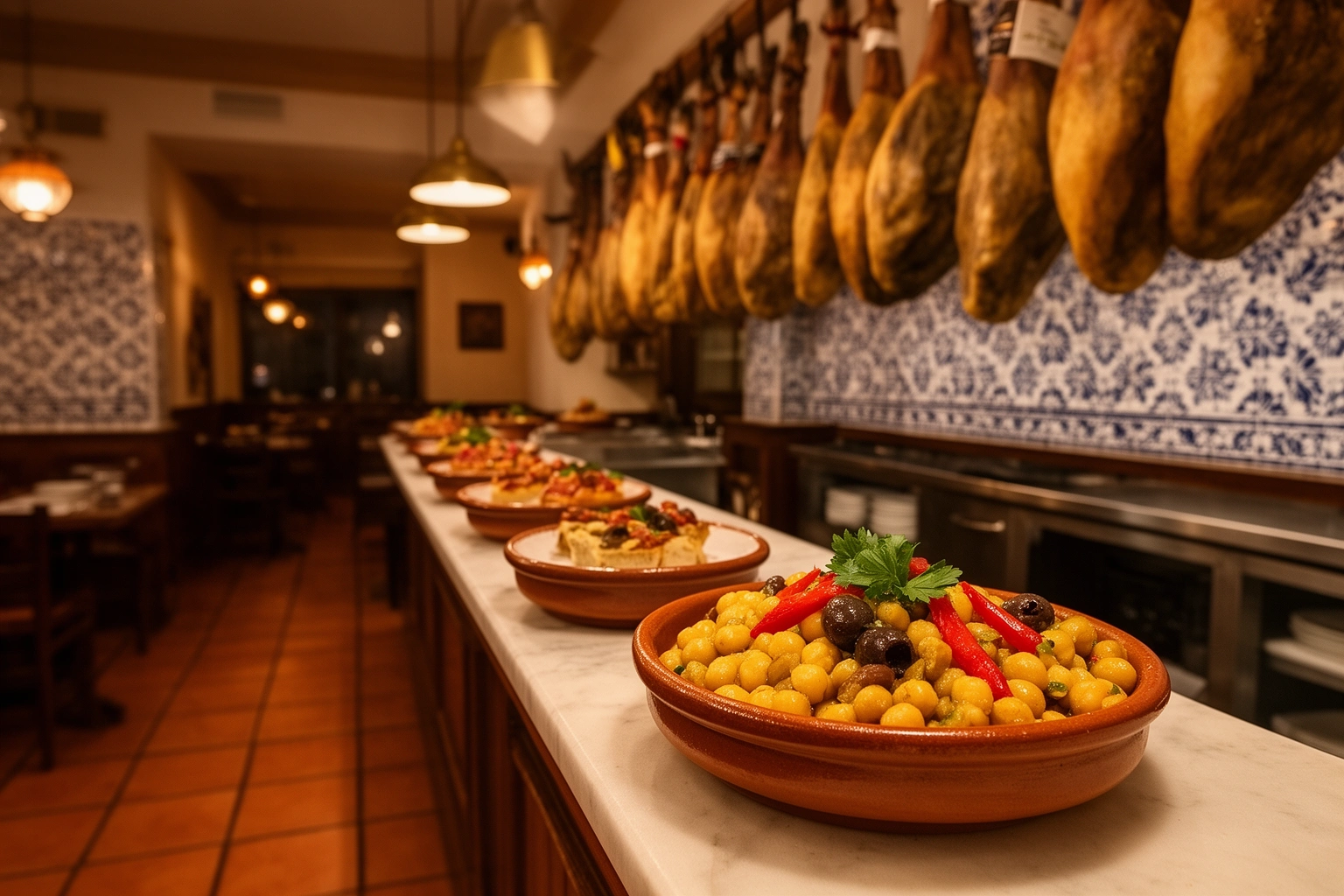
Spanish tapas bars and Spanish restaurants with explicitly regional menus are the most reliable source of authentic ensalada de garbanzos in the US. Mediterranean-general restaurants and healthy bowl chains serve chickpea salad under different names and with different flavor profiles that don’t represent the Spanish original.
New York City
New York has the deepest Spanish restaurant infrastructure in the country and the best concentration of spots likely to carry ensalada de garbanzos as part of a serious tapas menu. Boqueria, with locations in Flatiron, SoHo, and DC, runs a full Spanish tapas menu that includes chickpea dishes. Tomiño Taberna Galega in Nolita focuses on Galician Spanish cooking. Casa Mono in Gramercy, which earned a Michelin star and operated under Mario Batali’s influence for years, built its reputation on Aragonese and Basque-style cooking including legume salads. Bar Jamón, Casa Mono’s wine bar neighbor, carries a more casual tapas selection. The West Village and East Village both support independent Spanish restaurants and wine bars with tapas menus where ensalada de garbanzos appears regularly. Searching Yelp for “Spanish tapas” rather than “Mediterranean food” or “chickpea salad” in New York produces better results because it filters toward cuisine-specific kitchens.
Los Angeles
Los Angeles has a growing Spanish restaurant scene concentrated in Silver Lake, Echo Park, Los Feliz, and parts of the Westside. Several independently owned Spanish wine bars in Silver Lake serve rotating tapas menus that include legume salads alongside tinned fish and jamón. Restaurants that specifically advertise pintxos (Basque bar snacks) or Spanish wine lists tend to run more authentic tapas programs than places describing themselves as “Mediterranean.” The Westside also has a cluster of upscale Spanish restaurants near Brentwood and West Hollywood that carry extended tapas menus including chickpea preparations. Specialty food retailers like Bay Cities Italian Deli in Santa Monica carry imported Spanish ingredients including ventresca, piquillos, and sherry vinegar, which also signals neighborhood demand for Spanish cooking.
Miami
Miami’s large Cuban-Spanish crossover food culture creates natural demand for chickpea dishes. Spanish social clubs and restaurants in Coral Gables and Little Havana carry traditional Spanish tapas programs. The chickpea salad served in these spots often reflects the Andalusian style given the southern Spanish roots of many Cuban-Spanish families: heavier on bacalao, briny from capers and green olives, dressed with sherry vinegar. Spanish specialty food stores in Miami’s Doral area also carry high-quality imported ingredients and occasionally sell prepared versions of ensalada de garbanzos through their deli sections.
Chicago
Chicago’s Spanish restaurant scene is smaller but focused. A handful of independently owned Spanish tapas bars in River North and Logan Square run serious Spanish menus. The key search term in Chicago: look for restaurants listing “ibérico” products (jamón ibérico, chorizo ibérico) on their menus. Kitchens that invest in imported Spanish charcuterie almost always carry the pantry ingredients needed for an authentic ensalada de garbanzos, including proper piquillos and sherry vinegar.
Beyond Major Cities: Specialty Food Stores and Farmers Markets
In cities without dedicated Spanish restaurants, specialty food stores are an underrated source. Whole Foods, specialty import retailers, and stores serving Spanish or Mediterranean communities carry dried Spanish chickpeas, sherry vinegar, piquillo peppers, and ventresca tuna year-round. Many of these stores also have prepared food sections where a skilled deli cook may prepare a version that outperforms what local restaurants offer. Spanish cultural associations and food festivals in any major city periodically organize events where traditional dishes like ensalada de garbanzos appear in their most authentic form.
How to Evaluate Quality Before Ordering
Three questions reveal whether a Spanish restaurant understands ensalada de garbanzos before the dish arrives at the table: what vinegar the dressing uses, whether the chickpeas are house-cooked or canned, and whether the salad is served at room temperature or cold.
Reading the Menu
Menus that specify “sherry vinegar,” “piquillo peppers,” “ventresca,” or “bacalao” in the dish description are communicating ingredient care. Generic descriptions like “chickpea salad with vegetables and olive oil dressing” could describe anything from an authentic preparation to a canned-bean side dish dressed with grocery-store olive oil. The specificity of the ingredient list on a Spanish menu is itself a quality signal: restaurants confident in their sourcing tend to name what they use.
Menus using the Spanish name “ensalada de garbanzos” rather than “chickpea salad” or “garbanzo salad” suggest a kitchen that identifies with Spanish cuisine rather than a generically Mediterranean one. The naming choice matters because it indicates the kitchen’s culinary frame of reference, which shapes how every other ingredient decision is made.
Review Language Signals
When scanning Google or Yelp reviews for a Spanish restaurant, search the review text for “garbanzos,” “chickpea salad,” or “sherry vinegar.” Reviews that describe the salad as “nutty,” “complex,” “reminds me of Spain,” or “the best chickpea salad I’ve had” typically signal a quality version. Reviews that describe it as “healthy,” “light,” or “fresh” without further specificity suggest a simpler preparation that may lack the depth of an authentic Spanish version. Reviews from diners who specifically mention the vinegar type or the tuna quality are the most reliable quality guides.
Comparison: Spanish Ensalada de Garbanzos vs. Generic Chickpea Salad
| Feature | Authentic Spanish Version | Generic Chickpea Salad |
|---|---|---|
| Acid component | Sherry vinegar or aged red wine vinegar | Lemon juice or generic red wine vinegar |
| Pepper type | Piquillo peppers (fire-roasted, from Navarra) | Diced bell pepper or generic jarred roasted pepper |
| Protein | Ventresca tuna, bacalao, or hard-boiled egg | Grilled chicken, chickpeas only, or feta |
| Herb | Flat-leaf parsley, sometimes fresh oregano | Cilantro, mixed herb blends, or basil |
| Temperature | Room temperature after 15-30 min resting | Cold, direct from refrigerator |
| Context | Tapa or light main course at a Spanish restaurant | Side salad, bowl component, or health café item |
Making Ensalada de Garbanzos at Home
Home ensalada de garbanzos requires only seven core ingredients and about 20 minutes of preparation when using quality canned chickpeas. Dried chickpeas cooked from scratch improve the result significantly but add two hours of cooking time. Either way, a 30-minute rest after dressing is non-negotiable.
Start with the best chickpeas available: either quality Spanish or Italian canned garbanzo beans, drained and rinsed, or dried chickpeas soaked overnight and cooked until just tender with a bay leaf and a smashed garlic clove in the water. Drain and allow to cool to room temperature. While the chickpeas cool, prepare the other components: slice thin half-moons of red onion and soak in cold water for 10 minutes to mellow the sharpness. Dice ripe plum tomatoes. Open and slice jarred piquillo peppers into strips. Chop a generous handful of flat-leaf parsley.
Whisk the dressing: three parts good Spanish extra virgin olive oil to one part sherry vinegar, a pinch of fine sea salt, and optionally a small amount of Dijon mustard for emulsification. Combine chickpeas, drained onion, tomatoes, piquillos, and parsley in a wide bowl. Pour the dressing over and fold gently. Cover and rest at room temperature 20 to 30 minutes. Adjust salt and vinegar before serving. Flake ventresca tuna over the top at the table, or add halved hard-boiled eggs. Serve on a wide plate rather than a deep bowl, which allows the room-temperature chickpeas to stay at ambient temperature longer.
Sherry vinegar is the most important ingredient to source correctly. The best available in the US include Columela Sherry Vinegar, Louit Frères Sherry Vinegar, and Noel Columela Gran Reserva, all available at specialty food retailers and online. Standard red wine vinegar produces a sharper, less complex acid that noticeably changes the character of the dressing.
Check These Related Articles
- The Invisible Infrastructure of Learning: Zlibrary Official Domain
- A Real Himalayan Journey Guide: Langtang Valley Trek and 7-Day Annapurna Base Camp Trek
- Navigating Travel and Venue Logistics for a Destination Wedding in Japan
- Why Phu Quoc Is Fast Becoming the Ultimate Luxury Escape in Southeast Asia
- Resilience as an Inherited Skill
Ensalada de garbanzos belongs to the same Spanish tradition covered in our guide on finding authentic pollo al chilindron near you: dishes where a single ingredient decision (the vinegar, the pepper type, the pimentón) separates a version that tastes genuinely Spanish from one that merely resembles it. The same approach to evaluating menus, reading reviews for ingredient specificity, and targeting cuisine-specific rather than generalist restaurants applies to both. For anyone planning actual travel to Spain to eat these dishes in context, our guide to navigating travel logistics around specific food experiences covers the planning framework that applies equally to a food trip to Jerez, Aragón, or Andalusia.
Spanish regional cooking rewards the research. The culinary traditions that have survived centuries did so because they are genuinely worth preserving, and a properly made ensalada de garbanzos with aged sherry vinegar, piquillo peppers, and a tin of ventresca tuna opened at the table demonstrates exactly why simple food done with correct ingredients outperforms complex food done carelessly.
Frequently Asked Questions
What is ensalada de garbanzos?
Ensalada de garbanzos is a Spanish chickpea salad dressed with extra virgin olive oil and sherry or red wine vinegar, built around roasted piquillo peppers, red onion, tomato, and flat-leaf parsley. It is typically served at room temperature as a tapa or light main course, often topped with ventresca tuna, hard-boiled egg, or salt cod.
What makes Spanish ensalada de garbanzos different from regular chickpea salad?
The key differences are sherry vinegar instead of lemon juice, piquillo peppers instead of bell pepper, ventresca or bacalao instead of grilled chicken, flat-leaf parsley instead of cilantro, and room-temperature serving instead of cold. Together these produce a nutty, complex flavor profile that generic chickpea salads cannot replicate.
What is sherry vinegar and why does it matter?
Sherry vinegar (vinagre de Jerez) is produced in Andalusia from wine made with Palomino grapes, aged in oak barrels. Its flavor is nutty, complex, and rounder than standard wine vinegar. It is the acid base of authentic ensalada de garbanzos and is the single ingredient most often missing from inauthentic versions.
What are piquillo peppers?
Piquillo peppers are small fire-roasted red peppers from Navarra in northern Spain, packed in their own juices rather than brine. Their flavor is sweeter and mildly smoky compared to standard jarred roasted peppers. They are available at specialty food stores and Spanish importers in the US.
What is ventresca tuna and where can I find it?
Ventresca is the belly cut of Bonito del Norte (white tuna), packed in olive oil. Its texture is silky rather than flaky, and its flavor is richer and milder than standard canned tuna in water. Ortiz and Conservas Serrats are the most widely distributed brands in the US, available at specialty food retailers and Spanish import stores.
Where can I find the best ensalada de garbanzos near me in the US?
Spanish tapas bars and Spanish restaurants with regional menus are the most reliable source. In New York, try Boqueria, Casa Mono, or Tomiño Taberna Galega. In Los Angeles, search for Spanish wine bars in Silver Lake or Echo Park. In Miami, Spanish restaurants in Coral Gables or Little Havana are the best targets. Always search specifically for Spanish tapas rather than Mediterranean food.
Should ensalada de garbanzos be served hot or cold?
Authentic ensalada de garbanzos is served at room temperature, not cold. The salad rests for 15 to 30 minutes after dressing so the chickpeas absorb the oil and vinegar and the flavors meld. Serving it cold suppresses the olive oil’s fragrance and the sherry vinegar’s complexity.
Can I make ensalada de garbanzos at home?
Yes. The preparation takes about 20 minutes with quality canned chickpeas. The key ingredients are sherry vinegar, extra virgin olive oil, piquillo peppers, flat-leaf parsley, and either ventresca tuna or hard-boiled egg on top. Rest the dressed salad at room temperature for 30 minutes before serving. Dried chickpeas cooked from scratch improve the texture significantly.