choice for buyers who value lifestyle over floor plans. The proof lies in its year-round outdoor climate, home prices that put trail access within reach, and a commute trade-off that residents gladly accept.
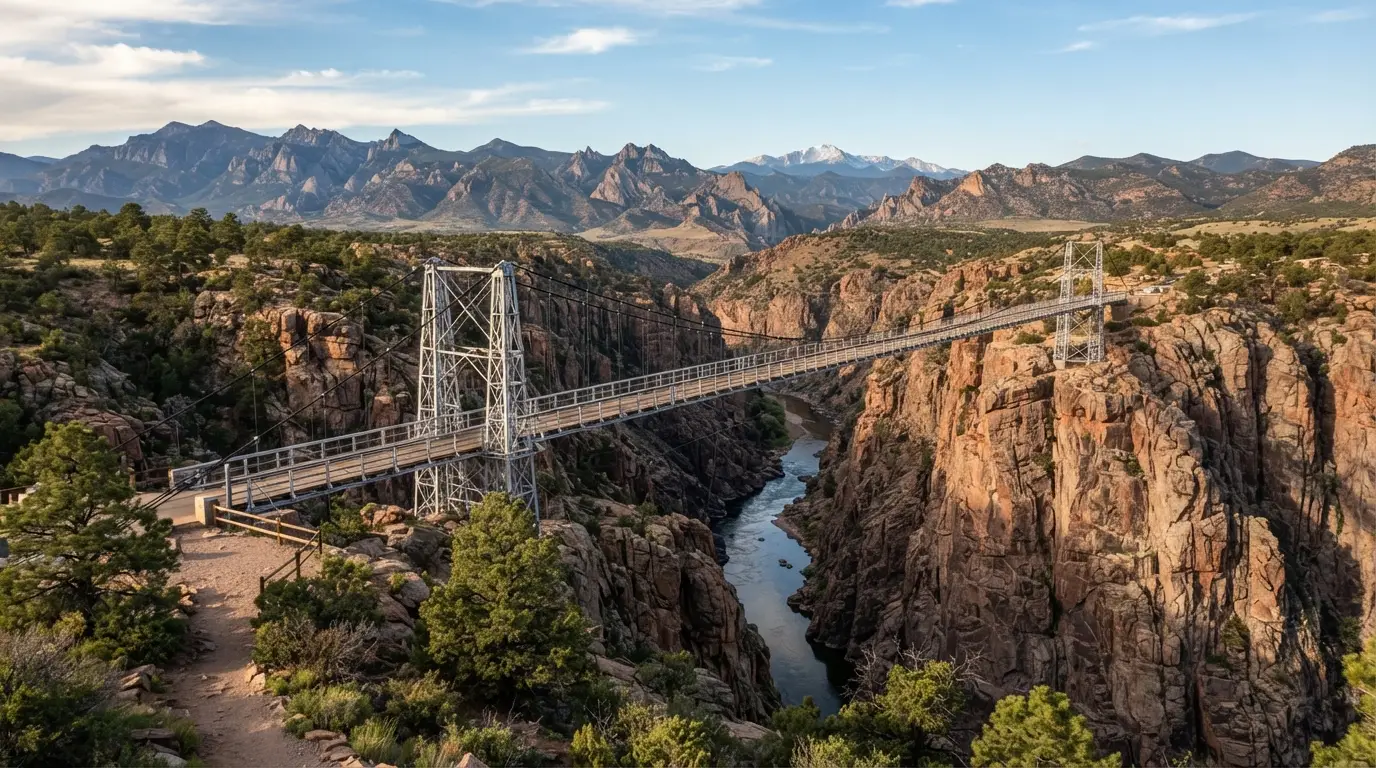
More than 26 million people have walked across the Royal Gorge Bridge near Cañon City since 1929, per KOAA News. Many of those tourists no longer leave. They hire moving trucks and stay instead.
Cañon City sits right along the Arkansas River, in a spot that used to be just another stop where rafting trips wrapped up. Today, it’s a permanent home base.
The Real Numbers Behind the Population Growth
Look at the headcounts. Cañon City’s population reached 17,081 in 2026, up from 16,918 in the 2020 census. On paper, a 1% rise over six years sounds small, but in a small town, even a tiny trickle of new families shows up fast. This type of steady influx actively fuels the local demand for starter homes in Cañon City, Colorado.
Zoom out to Fremont County as a whole, and the pattern holds. World Population Review puts the county at around 50,074 today, up from 46,834 in 2010, a slow, single-digit climb rather than a spike. That pace stands in sharp contrast to the sudden price surges seen in Colorado’s big ski towns.
That steady growth sets the stage for what’s actually pulling people here.
Climate Advantage That Beats High-Mountain Towns
Cañon City is at a height of 5,332 feet, roughly half the elevation of spots like Leadville or Breckenridge, and that gap reshapes daily life here. You get 300+ sunny days every year and winters that stay mild by Colorado standards, which is why locals call it the “Climate Capital of Colorado.”
Snow buries Vail for six months at a time, while the trails at Oil Well Flats stay bone-dry. You can ride your mountain bike well into late fall. Year-round outdoor access isn’t just marketing here; it’s what people do every week.
Buyers now care more about this kind of access than a bigger house. That shift becomes clearer once you look at what actually draws people to the river.
How the Arkansas River Drives the Local Economy
According to the Arkansas Headwaters Recreation Area’s (AHRA) 2024 annual report, 56 permitted commercial contractors operate along the stretch of the Arkansas River running from Leadville down to Cañon City.
Data from the Colorado River Outfitters Association (CROA) shows the Arkansas River recorded 211,635 commercial rafting user days in 2024, more than any other river in the state and about 43% of Colorado’s total rafting market. AHRA’s own report describes the corridor as “one of, if not the most, commercially rafted rivers in the United States.”
CROA’s 2024 report puts the Arkansas River’s economic impact at $89.1 million that year, the highest of any river in the state. That revenue funds guide jobs and keeps local businesses and outfitters running throughout the year.
Rafting isn’t the only pull, though. The Royal Gorge Bridge and Park still brings in massive crowds year after year. Oil Well Flats, BLM land just north of town, offers 12 miles of singletrack for mountain bikers, trail runners, and hikers.
According to the Outdoor Industry Association, U.S. outdoor recreation participation hit a record of more than 183 million in 2025. Fueled by this massive lifestyle shift, modern homebuyers are increasingly prioritizing living near trailheads over having extra square footage. But this works only if home prices don’t increase drastically.
Home Prices and the Real Cost of Ownership
This is where the math backs up the pitch. Houses here run well below the state’s, and the numbers make the gap clear. Redfin puts the median home price in Cañon City at $304,834, against Colorado’s statewide median of $567,219. Properties also sit on the market for an average of 69 days before selling, giving buyers time to think instead of racing into bidding wars.
Property taxes add to the savings. Cañon City’s median effective tax rate runs around 0.45%, below Colorado’s 0.50% state average and well below the national average of 1.02%.
On a $300,000 home, you save roughly $1,710 a year compared to typical U.S. property tax bills. That’s money you can put straight back into the lifestyle you moved here for, whether that’s gear, guided trips, or paying the place off faster.
Buyers can browse that price range for themselves on platforms like Houzeo, where Cañon City listings span everything from fixer-uppers to move-in-ready homes well under the state median. The bigger question for most of these buyers isn’t the price tag. It’s how far they’re willing to drive for it.
Commute Trade-off: Buyers Are Ready to Accept
Cañon City doesn’t leave buyers stranded. Colorado Springs is 46 miles north, about 50 to 60 minutes by car, and Denver is roughly two hours up the road when the trip is necessary.
For remote workers who only need to hit an office once in a while, it’s an easy swap in exchange for affordable living. Tools like Houzeo’s Closing Costs Calculator can show buyers exactly what a purchase at Cañon City’s price point looks like before they make an offer. No guesswork on what to bring to the table.
The Bigger Picture for 2026 Relocations
Moving to Cañon City involves some trade-offs. Average local household income is lower than state medians. Local jobs lean heavily on seasonal tourism, government, and state prisons, not six-figure tech positions.
So, this is more favorable for remote workers, retirees, or folks who don’t mind a lower local salary in exchange for immediate access to nature.
That’s exactly the trade Colorado buyers are increasingly willing to make. As Vail, Breckenridge, and Aspen keep pricing out anyone who isn’t already wealthy, towns like Cañon City are becoming the default alternative.
Buy here and access natural mountains, river sports, and real affordability, all without the ski-town markup. Cañon City offers sunny river-town living with houses priced in the $300,000s, and in today’s Colorado, that combination is what buyers are chasing next.